TAMSO-H® Capsules (ER)
Generic Name:
Tamsulosin Hydrochloride
Therapeutic Group:
Urological Agents
Drug Category:
Selective Alpha-1 Adrenergic Receptor Blocker
Content / Composition:
Each prolonged-release capsule contains:
* Tamsulosin Hydrochloride …… 0.4 mg
Indications:
Indicated for the management of:
* Benign Prostatic Hyperplasia (BPH)
* Lower urinary tract symptoms (LUTS) associated with BPH such as:
– Difficulty in urination
– Weak urine flow
– Incomplete bladder emptying
– Nocturia (frequent urination at night)
Dosage:
As directed by the physician.
Typical dosing:
* 0.4 mg once daily after the same meal each day
* If needed, may be increased to 0.8 mg daily (under medical supervision)
Contraindications:
* Hypersensitivity to tamsulosin or any component of the formulation
* History of orthostatic hypotension
* Severe hepatic impairment
Administration:
For oral use.
* Take after meals (preferably after breakfast)
* Swallow capsule whole (do not crush or chew)
* Take at the same time each day
Interaction:
Use caution with:
* Other alpha-blockers (↑ risk of hypotension)
* Antihypertensive drugs
* Strong CYP3A4 inhibitors (e.g., ketoconazole)
* CYP2D6 inhibitors
* PDE-5 inhibitors (e.g., sildenafil) – risk of hypotension
Compatibility:
Can be used with standard BPH therapies.
Combination with 5-alpha reductase inhibitors (e.g., finasteride) may enhance therapeutic effect.
Stability / Storage:
Store below 25°C.
Protect from moisture and light.
Keep out of reach of children.
Precautions:
* Monitor blood pressure (risk of dizziness or fainting)
* Use caution in elderly patients
* May cause intraoperative floppy iris syndrome (IFIS) during cataract surgery
* Not indicated for use in women or children
* Caution in renal impairment
Side Effects:
Common:
* Dizziness
* Headache
* Abnormal ejaculation
Less common:
* Orthostatic hypotension
* Palpitations
* Nasal congestion
Rare but serious:
* Syncope (fainting)
* Severe allergic reactions
* Priapism (very rare)
Website Note (Professional):
Tamsulosin is a highly selective alpha-1 blocker designed to improve urinary flow and reduce symptoms of BPH with minimal impact on blood pressure, offering effective and well-tolerated long-term management.
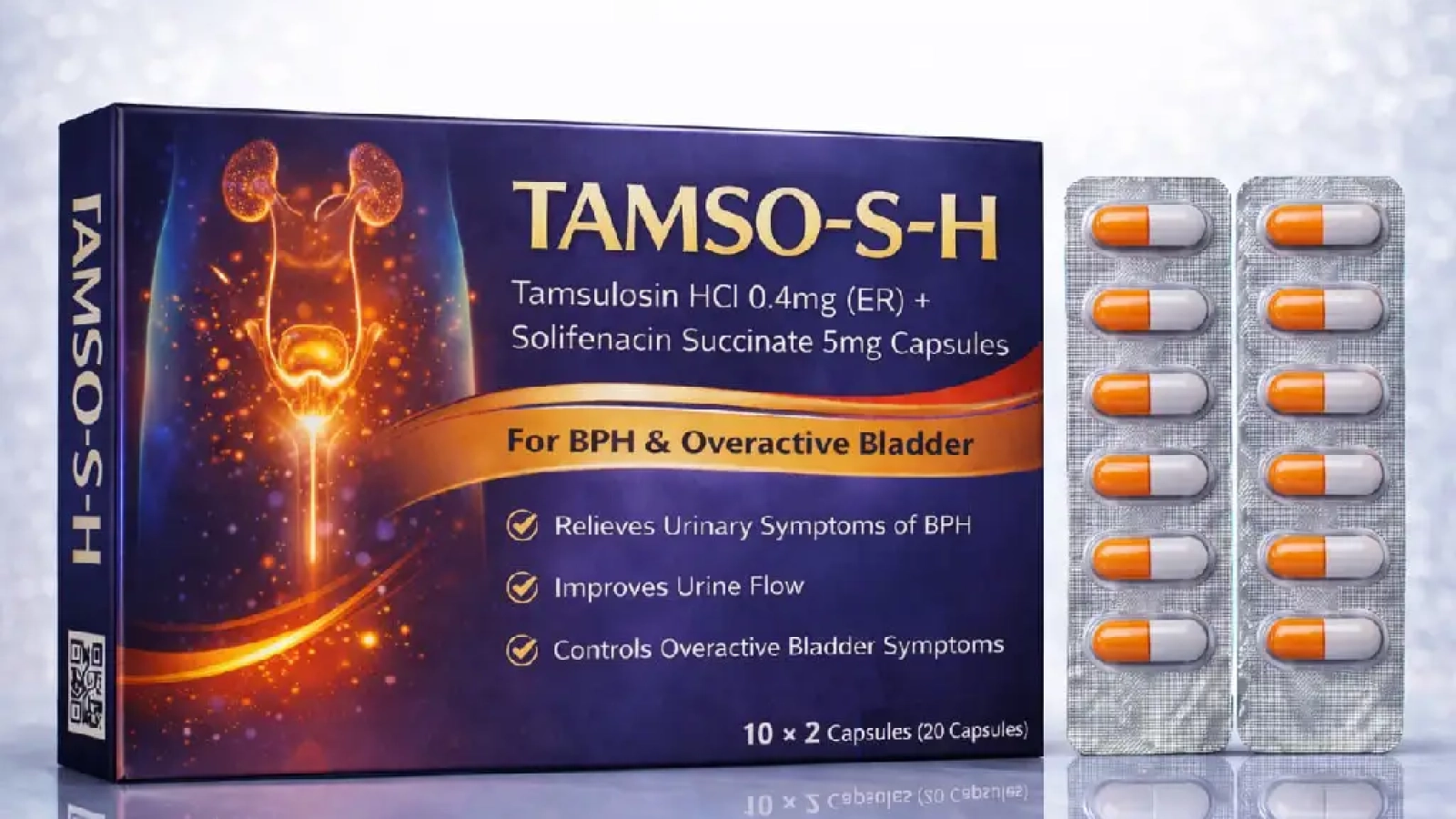
TAMSO-S-H® Capsules (ER)
Generic Name:
Tamsulosin Hydrochloride + Solifenacin Succinate
Therapeutic Group:
Urology / Lower Urinary Tract Disorder Management
Drug Category:
Alpha-1 Adrenergic Blocker + Antimuscarinic Agent
Content / Composition:
Each prolonged-release capsule contains:
* Tamsulosin Hydrochloride …… 0.4 mg
* Solifenacin Succinate …… 5 mg
Indications:
Indicated for the management of:
* Benign Prostatic Hyperplasia (BPH) with storage symptoms
* Overactive Bladder (OAB)
* Lower Urinary Tract Symptoms (LUTS), including:
– Urgency
– Frequency
– Nocturia
– Urge incontinence
Dosage:
As directed by the physician.
Typical dosing:
* One capsule once daily after meals
* Dose adjustment based on clinical response and tolerability
Contraindications:
* Hypersensiti
RAFAMIN-H® Tablets
RAFAMIN-H® Tablets
Generic Name:
Rifaximin
Therapeutic Group:
Gastrointestinal Anti-infective
Drug Category:
Non-systemic Rifamycin Antibiotic
Content / Composition:
Each film-coated tablet contains:
* Rifaximin …… 550 mg
Indications:
Indicated for the treatment of:
* Irritable Bowel Syndrome with Diarrhea (IBS-D)
* Small Intestinal Bacterial Overgrowth (SIBO)
* Traveler’s diarrhea (caused by non-invasive E. coli)
* Hepatic encephalopathy (reduction of recurrence)
Dosage:
As directed by the physician.
Typical dosing:
* IBS-D: 550 mg three times daily for 14 days
* Hepatic encephalopathy: 550 mg twice daily
* Traveler’s diarrhea: 200 mg three times daily for 3 days
Contraindications:
* Hypersensitivity to rifaximin, rifamycin derivatives, or any component
* Severe intestinal obstruction
* Diarrhea with fever and blood (invasive infections)
Administration:
For oral use.
* Can be taken with or without food
* Swallow tablet whole with water
* Complete full course of therapy
Interaction:
Minimal systemic absorption → low interaction risk
Use caution with:
* P-glycoprotein inhibitors
* Warfarin (monitor INR)
* Other antibiotics (risk of resistance)
Compatibility:
Compatible with most gastrointestinal therapies
Can be used alongside probiotics and IBS management regimens
Stability / Storage:
Store below 25°C
Protect from moisture and light
Keep out of reach of children
Precautions:
* Not effective in invasive bacterial diarrhea
* Use cautiously in severe hepatic impairment
* Risk of Clostridioides difficile-associated diarrhea
* Monitor for recurrence in chronic conditions (IBS, HE)
* Avoid unnecessary prolonged use
Side Effects:
Common:
* Nausea
* Flatulence
* Abdominal pain
* Headache
Less common:
* Constipation
* Dizziness
Rare but serious:
* Hypersensitivity reactions
* Severe diarrhea (C. difficile infection)
Website Note (Professional):
Rifaximin is a gut-selective antibiotic with minimal systemic absorption, offering targeted action in intestinal disorders such as IBS-D and SIBO while maintaining a favorable safety profile.
METRO-H® Tablets
METRO-H® Tablets
Generic Name:
Metronidazole
Therapeutic Group:
Anti-infective / Antiprotozoal
Drug Category:
Nitroimidazole Antibiotic
Content / Composition:
Each film-coated tablet contains:
* Metronidazole …… 500 mg
Indications:
Indicated for the treatment of:
* Amoebiasis (intestinal & hepatic)
* Giardiasis
* Trichomoniasis
* Bacterial vaginosis
* Anaerobic bacterial infections
* Dental infections (anaerobic origin)
* Intra-abdominal infections
Dosage:
As directed by the physician.
Typical dosing:
* Amoebiasis: 500–750 mg three times daily for 5–10 days
* Giardiasis: 250–500 mg twice to three times daily for 5–7 days
* Bacterial vaginosis: 500 mg twice daily for 7 days
* Anaerobic infections: 500 mg every 8 hours
Contraindications:
* Hypersensitivity to metronidazole or other nitroimidazoles
* First trimester of pregnancy (unless essential)
* Concomitant alcohol use (risk of disulfiram-like reaction)
Administration:
For oral use.
* Take with food to reduce gastric irritation
* Swallow with a full glass of water
* Complete full course of therapy
Interaction:
Use caution with:
* Alcohol (strictly avoid during and 48 hours after therapy)
* Warfarin (↑ anticoagulant effect)
* Lithium (↑ toxicity risk)
* Phenytoin & Phenobarbital
* Disulfiram
Compatibility:
Compatible with most antimicrobial regimens
Often used in combination therapy (e.g., H. pylori regimens)
Stability / Storage:
Store below 25°C
Protect from light and moisture
Keep out of reach of children
Precautions:
* Avoid alcohol during treatment
* Use cautiously in hepatic impairment
* Prolonged use may cause peripheral neuropathy
* Monitor blood counts in long-term therapy
* Use with caution in neurological disorders
Side Effects:
Common:
* Nausea
* Metallic taste
* Abdominal discomfort
* Headache
Less common:
* Dizziness
* Vomiting
* Diarrhea
Rare but serious:
* Peripheral neuropathy
* Seizures
* Severe hypersensitivity reactions
Website Note (Professional):
Metronidazole is a well-established antimicrobial agent effective against anaerobic bacteria and protozoa, widely used in gastrointestinal, gynecological, and dental infections.
DOXYNUS® Capsules
DOXYNUS® Capsules
Generic Name:
Doxycycline
Therapeutic Group:
Anti-infective
Drug Category:
Tetracycline Antibiotic
Content / Composition:
Each capsule contains:
* Doxycycline …… 100 mg (or as per strength)
Indications:
Indicated for the treatment of:
* Respiratory tract infections
* Urinary tract infections
* Skin and soft tissue infections (including acne)
* Sexually transmitted infections (e.g., Chlamydia)
* Gastrointestinal infections
* Rickettsial infections
* Malaria prophylaxis (in endemic areas)
Dosage:
As directed by the physician.
Typical dosing:
* Initial: 100 mg twice daily on first day
* Maintenance: 100 mg once or twice daily depending on infection
* Duration: Based on severity and type of infection
Contraindications:
* Hypersensitivity to doxycycline or other tetracyclines
* Pregnancy and breastfeeding
* Children under 8 years (risk of tooth discoloration)
Administration:
For oral use.
* Take with a full glass of water
* Preferably take after food to reduce gastric irritation
* Do not lie down immediately after taking (to avoid esophageal irritation)
Interaction:
Use caution with:
* Antacids (calcium, magnesium, aluminum) – reduce absorption
* Iron supplements
* Oral contraceptives (reduced effectiveness)
* Warfarin (↑ anticoagulant effect)
* Barbiturates & anticonvulsants
Compatibility:
Compatible with most antibacterial regimens
Avoid co-administration with substances that impair absorption (e.g., dairy, antacids)
Stability / Storage:
Store below 25°C
Protect from light and moisture
Keep out of reach of children
Precautions:
* Avoid excessive sunlight (photosensitivity risk)
* Use cautiously in hepatic impairment
* Long-term use may lead to superinfection
* Maintain adequate hydration
* Monitor for gastrointestinal irritation
Side Effects:
Common:
* Nausea
* Vomiting
* Diarrhea
* Photosensitivity
Less common:
* Esophagitis
* Skin rash
Rare but serious:
* Hepatotoxicity
* Severe allergic reactions
* Intracranial hypertension (very rare)
Website Note (Professional):
Doxycycline is a broad-spectrum tetracycline antibiotic widely used for treating a variety of infections with proven efficacy, convenient dosing, and excellent tissue penetration.
SBFLOX® Tablets
SBFLOX® Tablets
Generic Name:
Ofloxacin
Therapeutic Group:
Anti-infective
Drug Category:
Fluoroquinolone Antibiotic
Content / Composition:
Each film-coated tablet contains:
* Ofloxacin …… 400 mg
Indications:
Indicated for the treatment of:
* Respiratory tract infections (bronchitis, pneumonia)
* Urinary tract infections (UTIs)
* Gastrointestinal infections (including infectious diarrhea)
* Skin and soft tissue infections
* Sexually transmitted infections (e.g., gonorrhea, chlamydia)
* Prostatitis
Dosage:
As directed by the physician.
Typical dosing:
* 200–400 mg twice daily
* Duration depends on infection type and severity (usually 5–10 days)
Contraindications:
* Hypersensitivity to ofloxacin or other fluoroquinolones
* History of tendon disorders related to quinolones
* Epilepsy or seizure disorders
* Pregnancy and breastfeeding
* Children and adolescents (except when clearly indicated)
Administration:
For oral use.
* Can be taken with or without food
* Swallow whole with water
* Avoid taking with dairy products or antacids at the same time
Interaction:
Use caution with:
* Antacids (Mg/Al), calcium, iron (↓ absorption)
* NSAIDs (↑ risk of CNS stimulation/seizures)
* Warfarin (↑ anticoagulant effect)
* Theophylline
* Antiarrhythmic drugs (QT prolongation risk)
Compatibility:
Compatible with most antibacterial therapies
Avoid co-administration with agents that reduce absorption
Stability / Storage:
Store below 25°C
Protect from light and moisture
Keep out of reach of children
Precautions:
* Risk of tendonitis and tendon rupture (especially in elderly)
* Use cautiously in renal impairment (dose adjustment may be required)
* Avoid excessive sun exposure (photosensitivity)
* Monitor for CNS effects (dizziness, confusion)
* Discontinue if severe diarrhea occurs (possible C. difficile infection)
Side Effects:
Common:
* Nausea
* Diarrhea
* Headache
* Dizziness
Less common:
* Insomnia
* Skin rash
Serious (rare):
* Tendon rupture
* QT prolongation
* Severe hypersensitivity reactions
* Peripheral neuropathy
Website Note (Professional):
Ofloxacin is a broad-spectrum fluoroquinolone antibiotic known for its rapid bactericidal action, excellent tissue penetration, and effectiveness against a wide range of Gram-positive and Gram-negative pathogens.
SBFLOX® 200 Tablets
SBFLOX® 200 Tablets
Generic Name:
Ofloxacin
Therapeutic Group:
Anti-infective
Drug Category:
Fluoroquinolone Antibiotic
Content / Composition:
Each film-coated tablet contains:
* Ofloxacin …… 200 mg
Indications:
Indicated for the treatment of:
* Respiratory tract infections (acute bronchitis, pneumonia)
* Urinary tract infections (cystitis, pyelonephritis)
* Gastrointestinal infections (infectious diarrhea, traveler’s diarrhea)
* Skin and soft tissue infections
* Genitourinary infections (including gonorrhea and chlamydia)
* Prostatitis
Dosage:
As directed by the physician.
Typical dosing:
* 200 mg twice daily
* Dose and duration depend on infection severity (usually 5–10 days)
Contraindications:
* Hypersensitivity to ofloxacin or other quinolones
* History of tendon disorders related to fluoroquinolones
* Epilepsy or seizure disorders
* Pregnancy and lactation
* Pediatric patients (unless benefit outweighs risk)
Administration:
For oral use.
* May be taken with or without food
* Swallow with adequate water
* Avoid co-administration with milk, antacids, or mineral supplements
Interaction:
* Antacids (Al/Mg), calcium, iron → reduce absorption
* NSAIDs → increase CNS stimulation risk
* Warfarin → enhanced anticoagulant effect
* Theophylline → increased toxicity risk
* QT-prolonging drugs → cardiac risk
Compatibility:
Compatible with most systemic antibacterial regimens
Avoid simultaneous intake with absorption-reducing agents
Stability / Storage:
Store below 25°C
Protect from moisture and light
Keep out of reach of children
Precautions:
* Risk of tendonitis and tendon rupture (especially elderly patients)
* Use with caution in renal impairment (dose adjustment required)
* Avoid exposure to strong sunlight (photosensitivity risk)
* Monitor CNS effects (dizziness, confusion)
* Discontinue if severe diarrhea occurs
Side Effects:
Common:
* Nausea
* Diarrhea
* Headache
* Dizziness
Less common:
* Insomnia
* Rash
Serious (rare):
* Tendon rupture
* QT prolongation
* Severe hypersensitivity reactions
* Peripheral neuropathy
Professional Web Note:
Ofloxacin is a broad-spectrum fluoroquinolone antibiotic offering rapid bactericidal activity, excellent tissue penetration, and reliable efficacy against a wide range of Gram-positive and Gram-negative pathogens, making it a trusted choice for diverse bacterial infections.
S-MOXY® Tablets
S-MOXY® Tablets
Generic Name:
Moxifloxacin
Therapeutic Group:
Anti-infective
Drug Category:
Fluoroquinolone Antibiotic (Fourth Generation)
Content / Composition:
Each film-coated tablet contains:
* Moxifloxacin Hydrochloride …… equivalent to Moxifloxacin 400 mg
Indications:
Indicated for the treatment of:
* Community-acquired pneumonia (CAP)
* Acute bacterial sinusitis
* Acute exacerbation of chronic bronchitis
* Complicated and uncomplicated skin & soft tissue infections
* Intra-abdominal infections (in combination therapy where required)
* Urinary tract infections (selected cases)
Dosage:
As directed by the physician.
Typical dosing:
* 400 mg once daily
* Duration: usually 5–14 days depending on infection type and severity
Contraindications:
* Hypersensitivity to moxifloxacin or other quinolones
* History of tendon disorders related to fluoroquinolones
* Known QT prolongation or cardiac arrhythmias
* Severe hepatic impairment
* Pregnancy and lactation
* Pediatric population
Administration:
For oral use.
* Take once daily, with or without food
* Swallow whole with sufficient water
* Avoid simultaneous intake with antacids, iron, or zinc preparations
Interaction:
* Antacids (Al/Mg), iron, zinc → reduce absorption
* QT-prolonging drugs (antiarrhythmics, macrolides) → increased cardiac risk
* Corticosteroids → increased risk of tendon rupture
* Warfarin → monitor coagulation parameters
* NSAIDs → potential CNS stimulation
Compatibility:
Compatible with most antibacterial regimens
Avoid co-administration with drugs affecting QT interval or absorption
Stability / Storage:
Store below 25°C
Protect from light and moisture
Keep out of reach of children
Precautions:
* Risk of QT interval prolongation (monitor cardiac patients)
* Tendonitis and tendon rupture risk (especially elderly)
* Use cautiously in hepatic impairment
* Avoid excessive sunlight exposure (photosensitivity)
* Monitor for CNS effects (dizziness, confusion)
* Discontinue if severe diarrhea occurs
Side Effects:
Common:
* Nausea
* Diarrhea
* Headache
* Dizziness
Less common:
* Abdominal pain
* Insomnia
* Mild liver enzyme elevation
Serious (rare):
* QT prolongation
* Tendon rupture
* Severe hypersensitivity reactions
* Hepatotoxicity
* Peripheral neuropathy
Professional Web Note:
Moxifloxacin is a fourth-generation fluoroquinolone offering enhanced activity against Gram-positive, Gram-negative, and atypical pathogens, with excellent tissue penetration and once-daily dosing for improved patient compliance.
LEEVOXY® 750 Tablets
Generic Name:
Levofloxacin
Therapeutic Group:
Anti-infective
Drug Category:
Fluoroquinolone Antibiotic (Third Generation)
Content / Composition:
Each film-coated tablet contains:
* Levofloxacin …… 750 mg
Indications:
Indicated for the treatment of:
* Community-acquired pneumonia (CAP)
* Acute bacterial sinusitis
* Acute exacerbation of chronic bronchitis
* Urinary tract infections (complicated & uncomplicated)
* Pyelonephritis
* Skin and soft tissue infections
* Prostatitis
Dosage:
As directed by the physician.
Typical dosing:
* 750 mg once daily
* Duration: 5–14 days depending on infection type and severity
Contraindications:
* Hypersensitivity to levofloxacin or other fluoroquinolones
* History of tendon disorders related to quinolones
* Epilepsy or seizure disorders
* Pregnancy and lactation
* Pediatric patients
Administration:
For oral use.
* Take once daily, with or without food
* Swallow with sufficient water
* Avoid simultaneous intake with antacids, iron, zinc, or dairy products
Interaction:
* Antacids (Al/Mg), calcium, iron → reduce absorption
* Warfarin → increased bleeding risk (monitor INR)
* NSAIDs → increased CNS stimulation risk
* Corticosteroids → increased risk of tendon rupture
* QT-prolonging drugs → cardiac risk
Compatibility:
Compatible with most antibacterial therapies
Avoid co-administration with absorption-reducing agents
Stability / Storage:
Store below 25°C
Protect from light and moisture
Keep out of reach of children
Precautions:
* Risk of tendonitis and tendon rupture (higher in elderly)
* Use cautiously in renal impairment (dose adjustment required)
* Avoid excessive sunlight exposure (photosensitivity)
* Monitor CNS effects (dizziness, confusion)
* Risk of QT prolongation in susceptible patients
* Discontinue if severe diarrhea occurs
Side Effects:
Common:
* Nausea
* Diarrhea
* Headache
* Dizziness
Less common:
* Insomnia
* Skin rash
* Elevated liver enzymes
Serious (rare):
* Tendon rupture
* QT prolongation
* Severe hypersensitivity reactions
* Peripheral neuropathy
* Hepatotoxicity
Professional Web Note:
Levofloxacin is a potent broad-spectrum fluoroquinolone antibiotic offering once-daily dosing, excellent bioavailability, and strong activity against respiratory and urinary pathogens, making it a preferred choice in moderate to severe bacterial infections.
LEEVOXY® 500 Tablets
Generic Name:
Levofloxacin
Therapeutic Group:
Anti-infective
Drug Category:
Fluoroquinolone Antibiotic (Third Generation)
Content / Composition:
Each film-coated tablet contains:
* Levofloxacin …… 500 mg
Indications:
Indicated for the treatment of:
* Community-acquired pneumonia (CAP)
* Acute bacterial sinusitis
* Acute exacerbation of chronic bronchitis
* Urinary tract infections (UTIs)
* Complicated urinary infections & pyelonephritis
* Skin and soft tissue infections
* Prostatitis
Dosage:
As directed by the physician.
Typical dosing:
* 500 mg once daily
* Duration: usually 5–14 days depending on infection severity
Contraindications:
* Hypersensitivity to levofloxacin or other fluoroquinolones
* History of tendon disorders associated with quinolones
* Epilepsy or seizure disorders
* Pregnancy and lactation
* Pediatric patients
Administration:
For oral use.
* Take once daily with or without food
* Swallow with adequate water
* Avoid co-administration with antacids, calcium, iron, or zinc
Interaction:
* Antacids (Al/Mg), iron, calcium → decrease absorption
* Warfarin → increased bleeding risk (monitor INR)
* NSAIDs → increased CNS stimulation risk
* Corticosteroids → increased tendon rupture risk
* QT-prolonging drugs → increased cardiac risk
Compatibility:
Compatible with most antibacterial therapies
Avoid simultaneous intake with absorption-reducing agents
Stability / Storage:
Store below 25°C
Protect from light and moisture
Keep out of reach of children
Precautions:
* Risk of tendonitis and tendon rupture (especially elderly patients)
* Dose adjustment required in renal impairment
* Avoid prolonged sun exposure (photosensitivity)
* Monitor CNS effects (dizziness, confusion)
* Risk of QT prolongation in predisposed patients
* Discontinue if severe diarrhea occurs
Side Effects:
Common:
* Nausea
* Diarrhea
* Headache
* Dizziness
Less common:
* Insomnia
* Skin rash
* Elevated liver enzymes
Serious (rare):
* Tendon rupture
* QT prolongation
* Severe hypersensitivity reactions
* Peripheral neuropathy
* Hepatotoxicity
Professional Web Note:
Levofloxacin is a highly effective broad-spectrum fluoroquinolone antibiotic with excellent bioavailability, strong activity against respiratory and urinary pathogens, and convenient once-daily dosing for improved patient compliance.