SITA-H Tablets

SITA-H Tablets
Generic Name:
Sitagliptin 50 mg + Metformin Hydrochloride 1000 mg
Therapeutic Group:
Antidiabetic Combination
Drug Category:
DPP-4 Inhibitor + Biguanide
Content / Composition:
Each film-coated tablet contains:
Sitagliptin ……………………………… 50 mg
Metformin Hydrochloride ………… 1000 mg
Excipients ……………………………… q.s.
Indications:
SITA-H is indicated for:
Type 2 Diabetes Mellitus
Patients inadequately controlled with metformin alone or other oral agents
Improvement of glycemic control (fasting and postprandial glucose)
Combination therapy to enhance insulin secretion and reduce hepatic glucose production
Dosage:
One tablet twice daily with meals (or as directed by physician)
Dose should be individualized based on glycemic response
Gradual titration recommended to reduce gastrointestinal side effects
Contraindications:
Type 1 Diabetes Mellitus
Diabetic ketoacidosis
Severe renal impairment (eGFR <30 mL/min)
Severe hepatic disease
Hypersensitivity to sitagliptin or metformin
Conditions associated with lactic acidosis
Pregnancy and lactation
Administration:
Administer orally with meals
Swallow whole with water
Do not skip meals to reduce risk of hypoglycemia and GI side effects
Drug Interactions:
Increased hypoglycemia risk with insulin or sulfonylureas
Metformin interaction with iodinated contrast agents (risk of lactic acidosis)
Reduced efficacy with corticosteroids and diuretics
Alcohol increases risk of lactic acidosis
Compatibility:
Suitable for combination with insulin or other oral antidiabetic agents
Compatible with comprehensive diabetes management protocols
Stability / Storage:
Store below 25°C
Protect from moisture, heat, and light
Keep out of reach of children
Precautions:
Risk of lactic acidosis (due to metformin)
Monitor renal function regularly
Risk of pancreatitis (rare with DPP-4 inhibitors)
Monitor blood glucose levels
Use cautiously in elderly patients
Suspend before surgery or contrast imaging
Side Effects:
Common:
Gastrointestinal disturbances (nausea, diarrhea)
Headache
Hypoglycemia (when combined with other agents)
Uncommon:
Fatigue
Dizziness
Serious (Rare):
Lactic acidosis
Pancreatitis
Hypersensitivity reactions
Important Note:
SITA-H is a fixed-dose combination for effective glycemic control in Type 2 Diabetes Mellitus. It should be used under strict medical supervision. This information is intended for healthcare professionals and educational purposes only.

WhatsApp-Image-2026-04-11-at-7.18.28-AM__52___8___14_-removebg-preview (31)

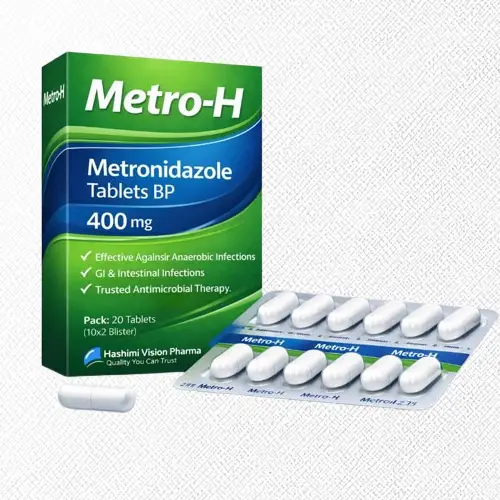
METRO-H® Tablets (Metronidazole 400 mg)

METRO-H® Tablets (Metronidazole 400 mg)

METRO-H® Tablets (Metronidazole 400 mg)
Generic Name:
Metronidazole
Therapeutic Group:
Antiprotozoal & Antibacterial (Anaerobic)
Drug Category:
Nitroimidazole Antimicrobial
Content / Composition:
Each tablet contains:
* Metronidazole BP …… 400 mg
* Excipients …… q.s.
Indications:
* Anaerobic bacterial infections
* Amoebiasis (intestinal & hepatic)
* Giardiasis
* Trichomoniasis
* Bacterial vaginosis
* Intra-abdominal infections
* Dental infections
* Pelvic infections

* Part of H. pylori eradication therapy
Dosage:
As directed by the physician
Adults:
* 400–800 mg, 2–3 times daily depending on infection
Amoebiasis:
* 400–800 mg TDS for 5–10 days
Giardiasis:
* 400 mg TDS for 5 days
Children:
* 20–30 mg/kg/day in divided doses
⚠️ Complete full course of therapy
Contraindications:
* Hypersensitivity to metronidazole or nitroimidazoles
* First trimester of pregnancy (unless essential)
* Active neurological disorders
* History of blood dyscrasia
Administration:
* Oral use
* Take after food to reduce GI irritation
* Avoid alcohol during and at least 48 hours after treatment
Interaction:
* Alcohol → Disulfiram-like reaction (severe nausea, vomiting)
* Warfarin → Increased anticoagulant effect
* Lithium → Increased lithium toxicity

* Phenytoin / Phenobarbital → Reduced efficacy
* Cimetidine → Increased metronidazole levels
Compatibility:
* Compatible with many antibiotics in combination therapy
* Commonly used in H. pylori regimens
Stability / Storage:
* Store below 25°C
* Protect from light and moisture
* Keep out of reach of children
Precautions:
* Avoid alcohol completely
* Use with caution in liver impairment
* Long-term use requires monitoring
* May cause metallic taste
* Caution in CNS disorders
Side Effects:
Common:
* Nausea
* Metallic taste
* Abdominal discomfort
* Headache
Less Common:
* Dizziness
* Diarrhea
* Dry mouth
Serious (rare):
* Peripheral neuropathy
* Seizures
* Severe hypersensitivity reactions
Professional Summary:
METRO-H® (Metronidazole 400 mg) is a globally trusted antimicrobial agent effective against:
✔️ Anaerobic bacterial infections
✔️ Protozoal infections
✔️ Gastrointestinal pathogens
Widely used as a first-line therapy in GI, gynecological, and systemic infections, with strong clinical efficacy.

WhatsApp-Image-2026-04-11-at-7.18.28-AM__52___8___14_-removebg-preview (29)

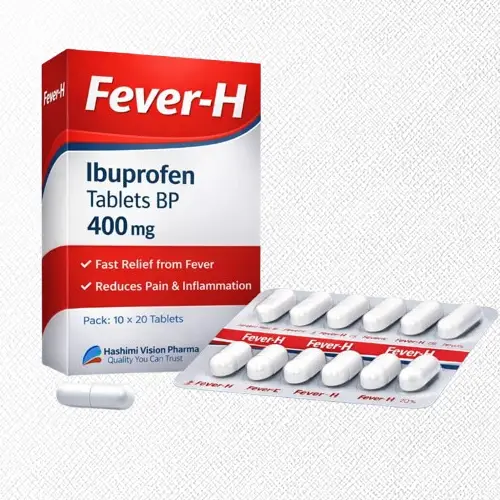
FEVER-H® Tablets (Ibuprofen 400 mg)

FEVER-H® Tablets (Ibuprofen 400 mg)

FEVER-H® Tablets (Ibuprofen 400 mg)
Generic Name:
Ibuprofen
Therapeutic Group:
Analgesic, Antipyretic & Anti-inflammatory
Drug Category:
Non-Steroidal Anti-Inflammatory Drug (NSAID)
Content / Composition:
Each tablet contains:
* Ibuprofen BP …… 400 mg
* Excipients …… q.s.
Indications:
* Fever (Pyrexia)
* Mild to moderate pain
* Headache
* Toothache
* Musculoskeletal pain
* Back pain
* Dysmenorrhea (menstrual pain)
* Inflammatory conditions (e.g. arthritis)


Precautions:
* Use cautiously in elderly patients
* Risk of GI ulceration and bleeding
* Monitor renal function in long-term use
* Caution in cardiovascular disease
* Avoid prolonged self-medication
Side Effects:
Common:
* Gastric irritation
* Nausea
* Dyspepsia
Less Common:
* Headache
* Dizziness
* Fluid retention
Serious (rare):
* GI bleeding or ulcer
* Renal impairment
* Hypersensitivity reactions
* Cardiovascular events (with long-term/high dose use)
Professional Summary:
FEVER-H® (Ibuprofen 400 mg) is a globally recognized NSAID providing:
✔️ Rapid fever reduction
✔️ Effective pain relief
✔️ Anti-inflammatory action
Widely used as a first-line therapy for fever, pain, and inflammatory conditions with strong clinical reliability.

* Cold & flu symptoms
Dosage:
As directed by the physician
Adults:
* 200–400 mg every 6–8 hours

* Maximum: 1200–2400 mg/day (depending on clinical condition)
Children (>6 months):
* 5–10 mg/kg every 6–8 hours
* Maximum: 40 mg/kg/day
⚠️ Use lowest effective dose for shortest duration
Contraindications:
* Hypersensitivity to ibuprofen or NSAIDs
* History of NSAID-induced asthma
* Active peptic ulcer or GI bleeding
* Severe heart failure
* Severe renal or hepatic impairment
* Third trimester of pregnancy
Administration:
* Oral use
* Take with food or after meals to reduce gastric irritation
* Swallow with sufficient water
Interaction:
* Anticoagulants (Warfarin) → increased bleeding risk
* Aspirin → reduced cardioprotective effect
* ACE inhibitors & diuretics → reduced renal function
* Corticosteroids → increased GI risk
* Lithium → increased lithium levels
Compatibility:
* Compatible with paracetamol in combination therapy (under supervision)
* Avoid concurrent use with other NSAIDs
Stability / Storage:
* Store below 25°C
* Protect from light and moisture
* Keep out of reach of children

WhatsApp-Image-2026-04-11-at-7.18.28-AM__52___8___14_-removebg-preview (28)

NURO-H® Syrup Ginkgo Biloba + Vitamin B-Complex + Folic Acid

NURO-H® Syrup Ginkgo Biloba + Vitamin B-Complex + Folic Acid

NURO-H® Syrup
Ginkgo Biloba + Vitamin B-Complex + Folic Acid
Generic Name:
Ginkgo Biloba Extract + Vitamin B-Complex + Folic Acid
Therapeutic Group:
Neurotonic / Cognitive Enhancer / Nutritional Supplement
Drug Category:
Herbal & Vitamin Combination
Content / Composition:
Each 5 mL contains (typical formulation):
* Ginkgo Biloba Extract …… 40–60 mg
* Vitamin B1 (Thiamine) …… 5 mg
* Vitamin B6 (Pyridoxine) …… 2 mg
* Vitamin B12 (Cyanocobalamin) …… 2–5 mcg
* Folic Acid …… 0.5–1 mg
* Excipients & Syrup Base …… q.s.
(Note: exact composition may vary based on final formulation)
Indications:

* Memory impairment
* Reduced concentration
* Mental fatigue
* Nervous weakness
* Peripheral neuropathy
* Vitamin B deficiency
* Cognitive support in elderly
* Stress-related mental exhaustion
Dosage:
As directed by the physician
Adults:
* 5–10 mL, 2 times daily
Children:
* 2.5–5 mL, 1–2 times daily
Contraindications:
* Hypersensitivity to any component
* Patients with bleeding disorders (Ginkgo caution)
* Use with caution in epilepsy
* Not recommended in pregnancy unless prescribed
Administration:
* Oral use
* Shake well before use
* Can be taken with or after food
Interaction:
* Anticoagulants (e.g. Warfarin) → increased bleeding risk (Ginkgo)
* Antiplatelet drugs (Aspirin, Clopidogrel)
* CNS-active drugs → possible additive effects
* Avoid with other high-dose vitamin supplements
Compatibility:
* Compatible with most supportive therapies
* Can be used alongside neurological and general treatments
Stability / Storage:

* Store below 25°C
* Protect from light
* Keep bottle tightly closed
* Keep out of reach of children
Precautions:
* Use cautiously in bleeding disorders
* Discontinue before surgery (Ginkgo effect)
* Monitor in long-term use
* Avoid overdose of vitamins
Side Effects:
Common:
* Mild GI discomfort
* Headache
Less Common:
* Dizziness
* Allergic reactions
Rare:
* Bleeding tendency (due to Ginkgo)
Professional Summary:
NURO-H® Syrup is a premium neuro-support formulation combining:
✔️ Ginkgo Biloba for improved cerebral circulation
✔️ Vitamin B-Complex for nerve health
✔️ Folic Acid for cognitive and metabolic support
Designed for brain performance, memory enhancement, and nervous system support, making it ideal for both clinical use and daily supplementation.

WhatsApp-Image-2026-04-11-at-7.18.28-AM__52___8___14_-removebg-preview (27)

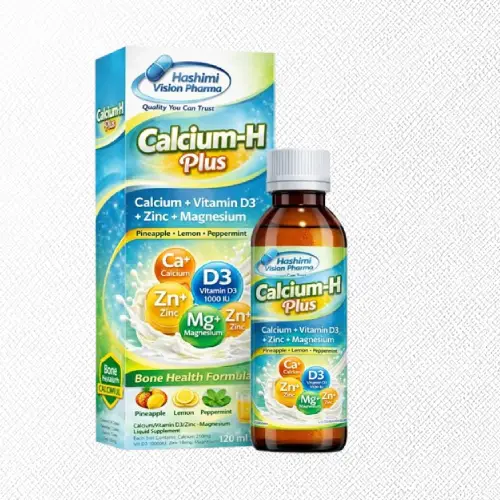
CALCIUM-H® Plus Syrup Calcium + Vitamin D3 + Zinc + Magnesium

CALCIUM-H® Plus Syrup
Calcium + Vitamin D3 + Zinc + Magnesium

CALCIUM-H® Plus Syrup
Calcium + Vitamin D3 + Zinc + Magnesium
Generic Name:
Calcium + Cholecalciferol (Vitamin D3) + Zinc + Magnesium
Therapeutic Group:
Nutritional Supplement / Bone Health Support
Drug Category:
Mineral & Vitamin Combination
Content / Composition:
Each 5 mL contains (typical formulation):
* Calcium …… 200–250 mg
* Vitamin D3 …… 400–1000 IU
* Zinc …… 5–10 mg
* Magnesium …… 50–100 mg
* Flavored Syrup Base …… q.s.
(Note: exact formulation may be adjusted based on final product specifications)
Indications:
* Calcium deficiency
* Osteoporosis prevention & management
* Bone growth in children
* Pregnancy & lactation support

* Monitor calcium levels in long-term use
* Use cautiously in renal disease
* Avoid overdose (especially Vitamin D)
* Not to exceed recommended daily dose
Side Effects:
Common:
* Mild GI discomfort
* Constipation
Less Common:
* Nausea
* Bloating
Rare:
* Hypercalcemia
* Kidney stone formation (long-term high dose)
Professional Summary:
CALCIUM-H® Plus Syrup is a comprehensive bone health formulation combining:
✔️ Calcium for bone strength
✔️ Vitamin D3 for absorption
✔️ Zinc for immunity & growth
✔️ Magnesium for muscle and nerve function
Designed as a complete daily support for bones, muscles, and overall health, ideal for children, adults, and elderly populations.

* Muscle weakness & cramps
* Vitamin D deficiency
* General nutritional supplementation
* Fracture healing support
Dosage:
As directed by the physician
Adults:
* 10 mL once or twice daily
Children:
* 5 mL once or twice daily
Contraindications:
* Hypercalcemia
* Hypervitaminosis D
* Severe renal impairment
* Kidney stones (calcium-containing)
* Hypersensitivity to any component
Administration:
* Oral use
* Shake well before use
* Preferably taken after meals
Interaction:
* Calcium ↓ absorption of tetracyclines & quinolones
* Vitamin D + thiazide diuretics → hypercalcemia risk
* Zinc ↓ absorption with high-dose iron/calcium
* Magnesium → may interact with certain antibiotics
Compatibility:
* Compatible with most nutritional therapies
* Can be used alongside multivitamins under supervision
Stability / Storage:
* Store below 25°C
* Protect from light
* Keep bottle tightly closed
* Keep out of reach of children
Precautions:

WhatsApp-Image-2026-04-11-at-7.18.28-AM__52___8___14_-removebg-preview (26)

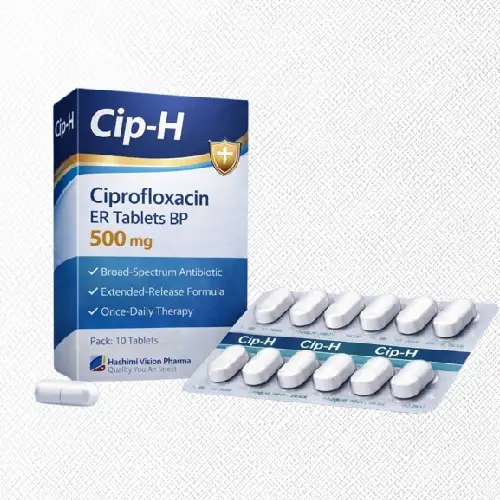
CIP-H Tablets 500 mg Ciprofloxacin Extended-Release Tablets BP

CIP-H Tablets 500 mg Ciprofloxacin Extended-Release Tablets BP

CIP-H Tablets 500 mg
Ciprofloxacin Extended-Release Tablets BP
Generic Name:
Ciprofloxacin (Extended-Release)
Therapeutic Group:
Antibacterial (Fluoroquinolone)
Drug Category:
Broad-Spectrum Antibiotic
Content / Composition:
Each extended-release tablet contains:
* Ciprofloxacin Hydrochloride equivalent to Ciprofloxacin …… 500 mg
* Excipients …… q.s.
Indications:
* Urinary Tract Infections (UTIs)
* Chronic bacterial prostatitis
* Respiratory tract infections

* Gastrointestinal infections (e.g., typhoid, traveler’s diarrhea)

* Skin & soft tissue infections
* Bone & joint infections
* Intra-abdominal infections (in combination therapy)
Dosage:
As directed by the physician
Adults (ER formulation):
* 500 mg once daily
Severe infections:
* Dose adjustment may be required
Renal impairment:
* Dose adjustment necessary
Contraindications:
* Hypersensitivity to ciprofloxacin or quinolones
* Concomitant use with tizanidine
* History of tendon disorders related to quinolones
* Children & adolescents (except specific indications)
Administration:
* Oral use
* Swallow whole (Do NOT crush or chew)
* Take with or without food
* Drink plenty of fluids
Interaction:
* Antacids (Ca, Mg, Al) ↓ absorption
* Theophylline ↑ toxicity risk
* Warfarin ↑ bleeding risk
* NSAIDs ↑ CNS stimulation risk
* Dairy products ↓ absorption if taken together
Compatibility:
* Compatible with most antibacterial regimens
* Avoid co-administration with metal ion-containing products
Stability / Storage:
* Store below 25°C
* Protect from moisture & light

* Keep in original packaging
Precautions:
* Risk of tendonitis & tendon rupture
* Use cautiously in elderly
* CNS effects (dizziness, seizures in rare cases)
* Avoid excessive sunlight (photosensitivity)
* Monitor renal function
Side Effects:
Common:
* Nausea
* Diarrhea
* Headache
Less Common:
* Dizziness
* Insomnia
* Abdominal pain
Serious (Rare):
* Tendon rupture
* QT prolongation
* Peripheral neuropathy
* Severe allergic reactions
Professional Summary:
CIP-H® ER 500 mg is a once-daily extended-release fluoroquinolone antibiotic offering:
✔️ Broad-spectrum antibacterial coverage
✔️ Improved patient compliance (once daily dosing)
✔️ Effective penetration in urinary & systemic infections
Ideal for moderate to severe infections requiring sustained plasma levels.

WhatsApp-Image-2026-04-11-at-7.18.28-AM__52___8___14_-removebg-preview (25)

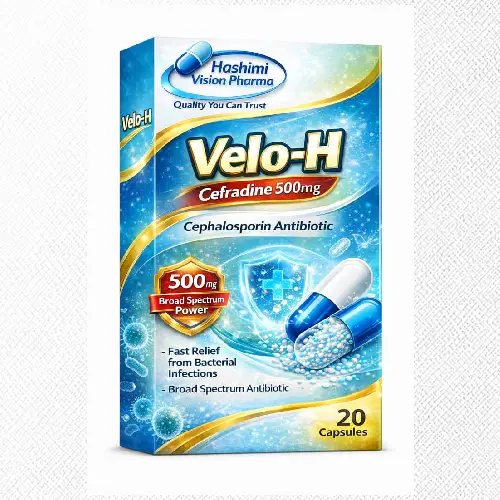
VELO-H® Capsules 500 mg Cefradine Capsules BP

VELO-H® Capsules 500 mg Cefradine Capsules BP

VELO-H® Capsules 500 mg
Cefradine Capsules BP
Generic Name:
Cefradine
Therapeutic Group:
Antibacterial (Cephalosporin – 1st Generation)
Drug Category:
Broad-Spectrum Antibiotic
Content / Composition:
Each capsule contains:
* Cefradine BP …… 500 mg
* Excipients …… q.s.
Indications:
* Upper & lower respiratory tract infections
* Urinary tract infections (UTIs)
* Skin & soft tissue infections
* Ear, Nose & Throat (ENT) infections
* Bone & joint infections
* Dental infections
Dosage:

As directed by the physician
Adults:
* 500 mg every 6–12 hours
Severe infections:
* Up to 1–2 g daily in divided doses
Children:
* 25–50 mg/kg/day in divided doses
Renal impairment:
* Dose adjustment required
Contraindications:
* Hypersensitivity to cephalosporins
* Severe allergy to penicillins (cross-reactivity risk)
Administration:
* Oral use
* Can be taken with or without food
* Swallow with sufficient water
Interaction:
* Probenecid ↑ Cefradine levels
* Anticoagulants ↑ bleeding risk
* Aminoglycosides ↑ nephrotoxicity risk
* Diuretics (e.g., furosemide) ↑ renal toxicity
Compatibility:
* Compatible with most standard antibiotic therapies
* Avoid unnecessary combination with nephrotoxic drugs
Stability / Storage:
* Store below 25°C
* Protect from moisture & light


* Keep in original packaging
Precautions:
* Use with caution in renal impairment
* Monitor for allergic reactions
* Long-term use may cause superinfection
* Caution in patients with GI disease
Side Effects:
Common:
* Nausea
* Diarrhea
* Abdominal discomfort
Less Common:
* Skin rash
* Dizziness
Serious (Rare):
* Anaphylaxis
* Clostridium difficile-associated diarrhea
* Hematological changes
Professional Summary:
VELO-H® 500 mg (Cefradine) is a first-generation cephalosporin antibiotic providing:
✔️ Reliable Gram-positive coverage
✔️ Effective treatment of common community infections
✔️ Good safety profile for routine clinical use
Ideal for respiratory, urinary, skin, and soft tissue infections.

WhatsApp-Image-2026-04-11-at-7.18.28-AM__52___8___14_-removebg-preview (24)

VELO-H® Oral Suspension 125 mg/5 mL Cefradine Oral Suspension BP

VELO-H® Oral Suspension 125 mg/5 mL Cefradine Oral Suspension BP

VELO-H® Oral Suspension 125 mg/5 mL
Cefradine Oral Suspension BP
Generic Name:
Cefradine
Therapeutic Group:
Antibacterial (Cephalosporin – 1st Generation)
Drug Category:
Broad-Spectrum Antibiotic (Pediatric Oral Suspension)
Content / Composition:
Each 5 mL reconstituted suspension contains:
* Cefradine BP …… 125 mg
* Flavoured base (orange)
* Excipients …… q.s.
Indications:
* Respiratory tract infections (tonsillitis, pharyngitis, bronchitis)
* Urinary tract infections (UTIs)
* Skin & soft tissue infections
* Ear infections (otitis media)
* Pediatric bacterial infections
Dosage:

As directed by the physician
Children:
* 25–50 mg/kg/day in divided doses (every 6–12 hours)
Severe infections:
* Up to 75–100 mg/kg/day
Adults (if required):
* As per capsule equivalent dose
Contraindications:
* Hypersensitivity to cephalosporins
* Severe penicillin allergy (cross-reactivity possible)
Administration:
* Oral use
* Shake well before use
* Use measuring spoon or cup
* Can be taken with or without food
Interaction:
* Probenecid ↑ Cefradine levels
* Anticoagulants ↑ bleeding risk
* Nephrotoxic drugs ↑ kidney risk
* Diuretics (e.g., furosemide) ↑ nephrotoxicity
Compatibility:
* Compatible with standard pediatric therapies
* Avoid unnecessary combination with nephrotoxic drugs
Stability / Storage:
* Dry powder: Store below 25°C
* After reconstitution:
✔️ Use within 7–10 days
✔️ Store in refrigerator (2–8°C)

* Protect from light
Precautions:
* Use cautiously in renal impairment
* Monitor allergic reactions (rash, itching)
* Prolonged use may cause superinfection
* Ensure full course completion
Side Effects:
Common:
* Diarrhea
* Nausea
* Mild abdominal discomfort
Less Common:
* Skin rash
* Vomiting
Serious (Rare):
* Anaphylaxis
* Severe diarrhea (C. difficile)
* Blood disorders
Professional Summary:
VELO-H® Suspension 125 mg/5 mL is a pediatric-friendly cephalosporin antibiotic offering:
✔️ Effective treatment of common childhood infections
✔️ Pleasant taste for better compliance
✔️ Reliable safety profile
Ideal for respiratory, urinary, ENT, and skin infections in children.

WhatsApp-Image-2026-04-11-at-7.18.28-AM__52___8___14_-removebg-preview (23)

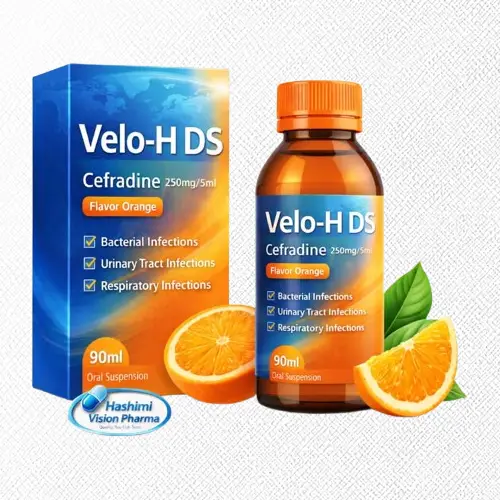
VELO-H DS® Oral Suspension 250 mg/5 mL Cefradine Oral Suspension BP (Double Strength)

VELO-H DS® Oral Suspension 250 mg/5 mL
Cefradine Oral Suspension BP (Double Strength)

VELO-H DS® Oral Suspension 250 mg/5 mL
Cefradine Oral Suspension BP (Double Strength)
Generic Name:
Cefradine
Therapeutic Group:
Antibacterial (Cephalosporin – 1st Generation)
Drug Category:
Broad-Spectrum Antibiotic (Pediatric Double Strength Suspension)
Content / Composition:
Each 5 mL reconstituted suspension contains:
* Cefradine BP …… 250 mg
* Flavoured base (Orange)
* Excipients …… q.s.
Indications:
* Respiratory tract infections (pharyngitis, tonsillitis, bronchitis)
* Urinary tract infections (UTIs)
* Skin & soft tissue infections
* Ear infections (otitis media)
* Moderate to severe pediatric bacterial infections
Dosage:

As directed by the physician
Children:
* 25–50 mg/kg/day in divided doses (every 6–12 hours)
Severe infections:
* Up to 75–100 mg/kg/day
Advantage of DS:
✔️ Lower volume per dose
✔️ Better compliance in children
Contraindications:
* Hypersensitivity to cephalosporins
* Severe penicillin allergy (cross-reactivity risk)
Administration:
* Oral use
* Shake well before use
* Measure accurately using dosing cup/spoon
* Can be taken with or without food
Interaction:
* Probenecid ↑ Cefradine concentration
* Anticoagulants ↑ bleeding tendency
* Aminoglycosides ↑ nephrotoxicity
* Loop diuretics ↑ renal risk
Compatibility:
* Compatible with routine pediatric therapies
* Avoid concurrent use with nephrotoxic agents when possible
Stability / Storage:
* Dry powder: Store below 25°C
* After reconstitution:
✔️ Use within 7–10 days
✔️ Store in refrigerator (2–8°C)

* Protect from light
Precautions:
* Use cautiously in renal impairment
* Monitor for hypersensitivity reactions
* Prolonged use may lead to superinfection
* Ensure full course completion to avoid resistance
Side Effects:
Common:
* Diarrhea
* Nausea
* Abdominal discomfort
Less Common:
* Skin rash
* Vomiting
Serious (Rare):
* Anaphylaxis
* Severe colitis (C. difficile)
* Blood dyscrasias
Professional Summary:
VELO-H DS® 250 mg/5 mL is a high-strength pediatric cephalosporin suspension offering:
✔️ Strong antibacterial coverage
✔️ Reduced dosing volume (child-friendly)
✔️ Enhanced compliance in moderate to severe infections
Ideal for pediatric respiratory, urinary, ENT, and systemic infections requiring higher dosing strength.

WhatsApp-Image-2026-04-11-at-7.18.28-AM__52___8___14_-removebg-preview (22)

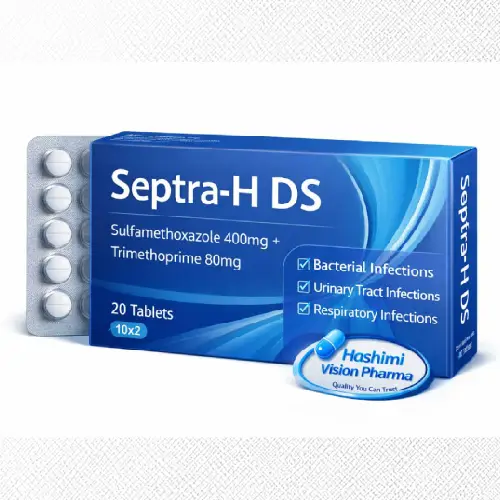
SEPTRA-H DS® Tablets Sulfamethoxazole 400 mg + Trimethoprim 80 mg Tablets BP

SEPTRA-H DS® Tablets Sulfamethoxazole
400 mg + Trimethoprim 80 mg Tablets BP

SEPTRA-H DS® Tablets
Sulfamethoxazole 400 mg + Trimethoprim 80 mg Tablets BP
Generic Name:
Sulfamethoxazole + Trimethoprim (Co-trimoxazole)
Therapeutic Group:
Antibacterial (Sulfonamide + Folate Inhibitor Combination)
Drug Category:
Broad-Spectrum Antibiotic
Content / Composition:
Each tablet contains:
* Sulfamethoxazole …… 400 mg
* Trimethoprim …… 80 mg
* Excipients …… q.s.
Indications:
* Urinary tract infections (UTIs)
* Respiratory tract infections (bronchitis, pneumonia)
* Gastrointestinal infections (shigellosis, traveler’s diarrhea)
* Skin & soft tissue infections
* Ear infections (otitis media)
* Pneumocystis jirovecii pneumonia (PCP)
* Certain opportunistic infections
Dosage:


As directed by the physician
Adults:
* 1–2 tablets every 12 hours
Severe infections:
* Higher doses may be required under supervision
Children:
* Dose based on body weight
Renal impairment:
* Dose adjustment necessary
Contraindications:
* Hypersensitivity to sulfonamides or trimethoprim
* Severe liver disease
* Severe renal impairment (without monitoring)
* Megaloblastic anemia (folate deficiency)
* Infants < 2 months
Administration:
* Oral use
* Take with a full glass of water
* Preferably after meals
* Maintain adequate hydration
Interaction:
* Warfarin ↑ bleeding risk
* Phenytoin ↑ toxicity
* Methotrexate ↑ toxicity
* ACE inhibitors ↑ hyperkalemia risk
* Diuretics ↑ thrombocytopenia risk
Compatibility:
* Compatible with many antibiotic regimens
* Avoid unnecessary combination with folate antagonists
Stability / Storage:


* Store below 25°C
* Protect from light & moisture
* Keep in original packaging
Precautions:
* Risk of severe skin reactions (Stevens-Johnson Syndrome)
* Monitor renal and liver function
* Ensure adequate hydration
* Use cautiously in elderly patients
* Avoid prolonged sun exposure
Side Effects:
Common:
* Nausea
* Vomiting
* Loss of appetite
Less Common:
* Skin rash
* Headache
* Dizziness
Serious (Rare):
* Stevens-Johnson Syndrome (SJS)
* Toxic Epidermal Necrolysis (TEN)
* Blood disorders (anemia, leukopenia)
* Hyperkalemia
Professional Summary:
SEPTRA-H DS® is a well-established combination antibiotic offering:
✔️ Dual mechanism (bacteriostatic synergy)
✔️ Broad-spectrum antibacterial activity
✔️ Effective against urinary, respiratory, and GI infections
Ideal for community-acquired infections and selected opportunistic infections.