WhatsApp-Image-2026-04-11-at-7.18.28-AM (7)

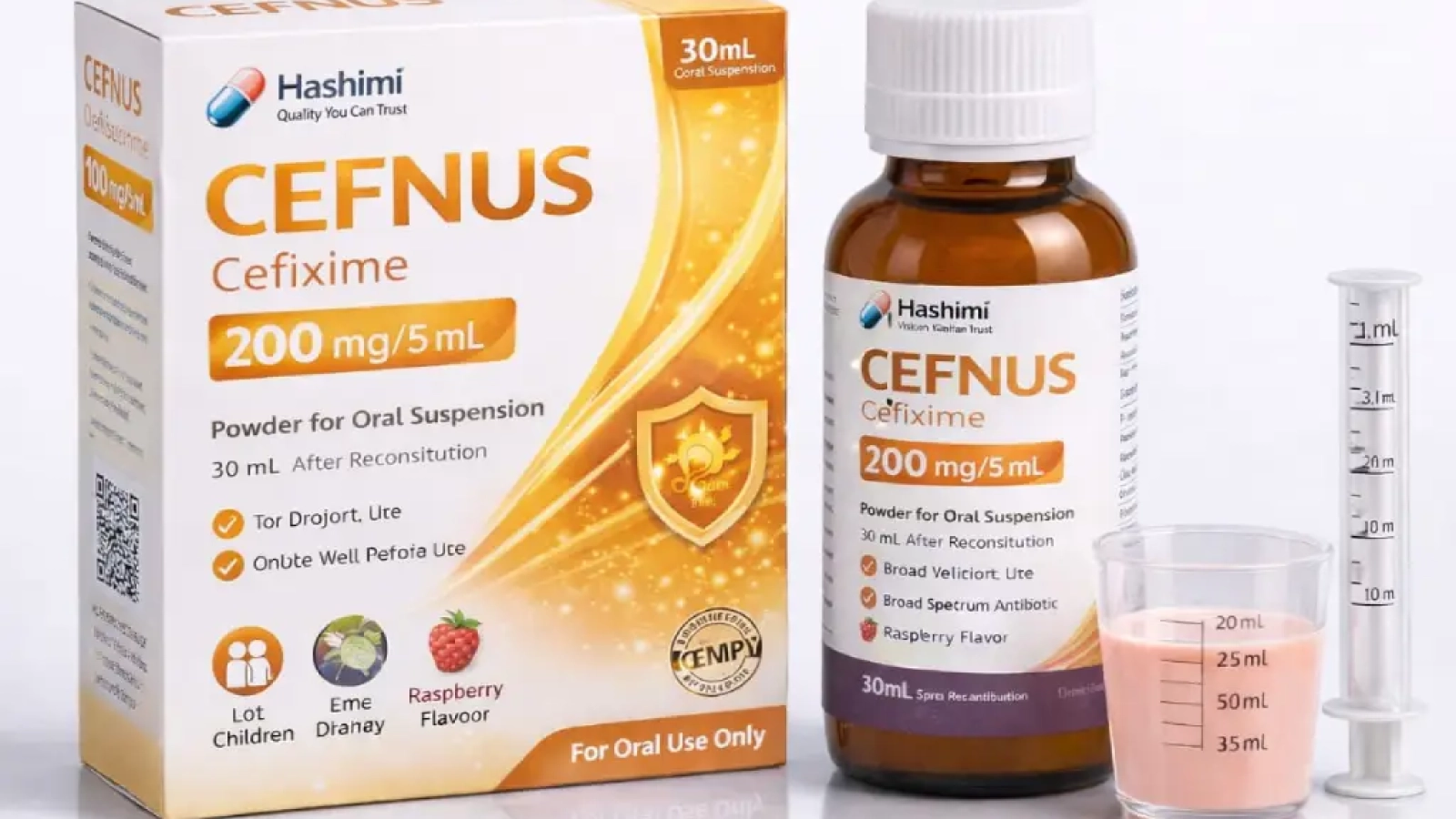
CEFNUS Pediatric Suspension

CEFNUS Pediatric Suspension
(Cefixime 200 mg/5 mL)
Generic Name:
Cefixime
Therapeutic Group:
Antibacterial
Drug Category:
Third-Generation Cephalosporin Antibiotic
Content / Composition:
After reconstitution, each 5 mL contains:
Cefixime ………………………………… 200 mg
Excipients (including flavoring agents) … q.s.
Indications:
CEFNUS Suspension is indicated for the treatment of bacterial infections in children, including:
Upper respiratory tract infections (tonsillitis, pharyngitis, sinusitis)
Lower respiratory tract infections (bronchitis, pneumonia)
Otitis media (ear infection)
Urinary tract infections (UTIs)
Typhoid fever
Gastrointestinal infections
Dosage:
Children (6 months and above):
8 mg/kg/day as a single dose
یا
Divided into two doses (4 mg/kg every 12 hours)
Maximum Dose:
400 mg/day
Duration:
معمولاً 5–10 روز
Typhoid: 7–14 days (as prescribed)
Contraindications:
Hypersensitivity to cefixime or cephalosporins
Known allergy to beta-lactam antibiotics
Administration:
For oral use only
Shake well before use
Use measuring cup or syringe for accurate dosing
Can be given with or without food
Complete full course
Drug Interactions:
Anticoagulants → may increase bleeding risk
Carbamazepine → increased serum levels
Probenecid → increases cefixime concentration
Compatibility / Clinical Benefits:
Pediatric-friendly formulation
Pleasant flavored suspension improves compliance
Broad-spectrum activity against common pathogens
Once-daily dosing option
Effective in outpatient pediatric therapy
Stability / Storage:
Store dry powder below 25°C before reconstitution
After reconstitution:
Use within 7–14 days
Keep tightly closed
Do not freeze
Precautions:
Use with caution in renal impairment
Monitor for allergic reactions
Risk of antibiotic-associated diarrhea
Avoid unnecessary prolonged use
Side Effects:
Common:
Diarrhea
Nausea
Abdominal discomfort
Uncommon:
Rash
Headache
Serious (Rare):
Hypersensitivity reactions
Stevens-Johnson Syndrome
Severe colitis
Clinical Advantages:
CEFNUS Pediatric Suspension offers:
Safe and effective antibiotic for children
Accurate weight-based dosing
Improved taste → better compliance
Strong efficacy in respiratory & systemic infections
Packaging:
30 mL bottle (after reconstitution)
With measuring cup / oral syringe

WhatsApp-Image-2026-04-11-at-7.18.28-AM (6)

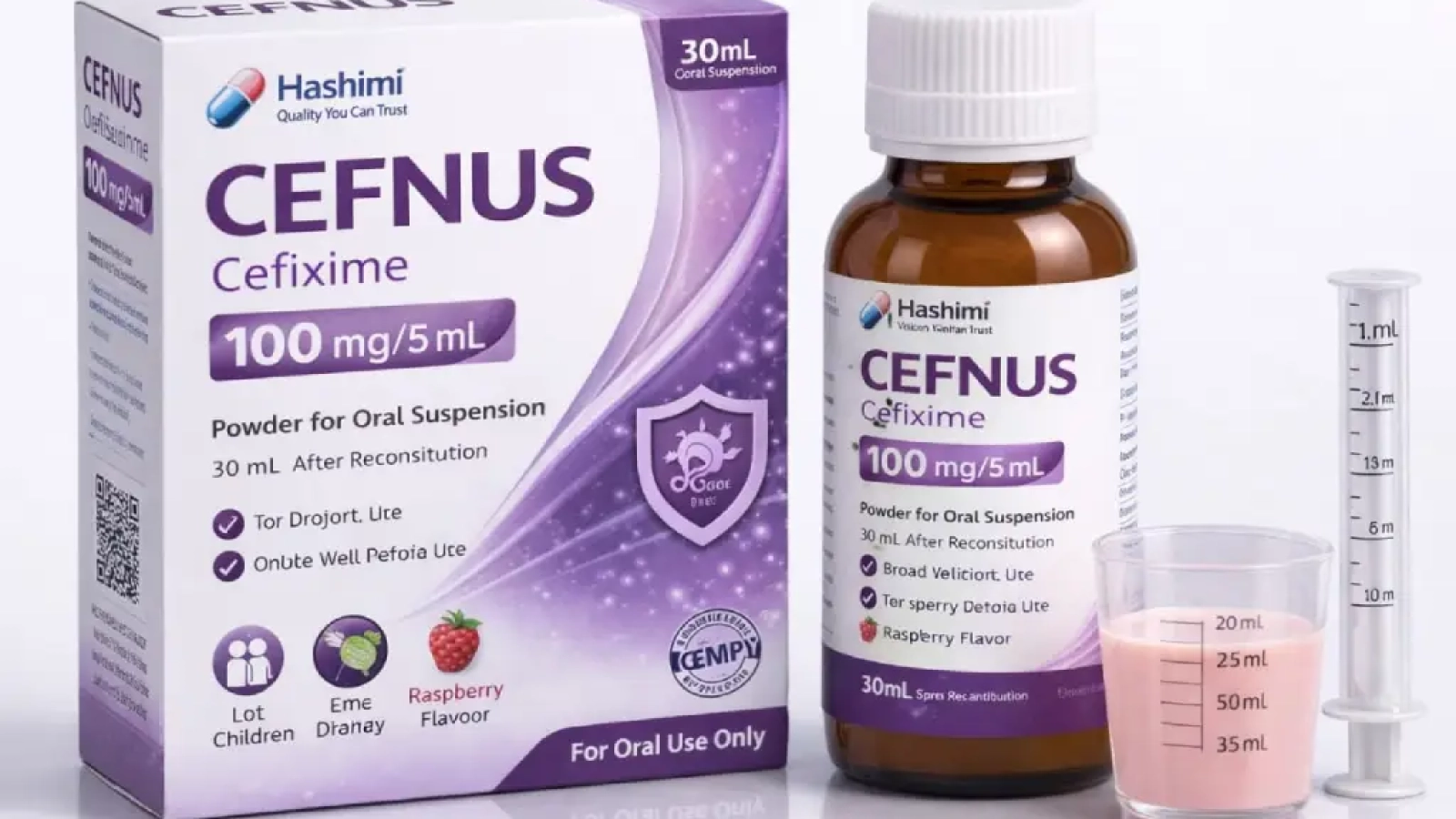
CEFNUS Pediatric Suspension

CEFNUS Pediatric Suspension
(Cefixime 100 mg/5 mL)
Generic Name:
Cefixime
Therapeutic Group:
Antibacterial
Drug Category:
Third-Generation Cephalosporin Antibiotic
Content / Composition:
After reconstitution, each 5 mL contains:
Cefixime ………………………………… 100 mg
Excipients (including flavoring agents) … q.s.
Indications:
CEFNUS 100 mg/5 mL Suspension is indicated for pediatric use in:
Upper respiratory tract infections (pharyngitis, tonsillitis, sinusitis)
Lower respiratory infections (bronchitis, pneumonia)
Otitis media
Urinary tract infections (UTIs)
Typhoid fever
Gastrointestinal bacterial infections
Dosage:
Children (≥ 6 months):
8 mg/kg/day as a single daily dose
یا
4 mg/kg every 12 hours
Maximum Dose:
400 mg/day
Typical Duration:
5–10 days
Typhoid: 7–14 days (as directed by physician)
Contraindications:
Hypersensitivity to cefixime or cephalosporins
Severe allergy to penicillins (cross-reactivity risk)
Administration:
For oral use only
Reconstitute with clean water to marked level
Shake well before each use
Measure dose using syringe or cup
Can be taken with or without food
Drug Interactions:
Anticoagulants → increased bleeding risk
Carbamazepine → increased plasma levels
Probenecid → increases cefixime levels
Compatibility / Clinical Benefits:
مناسب برای کودکان (Pediatric-friendly)
Taste-enhanced formulation → better compliance
Once-daily dosing possible
Broad-spectrum antibacterial coverage
Effective in outpatient pediatric infections
Stability / Storage:
Store dry powder below 25°C
After reconstitution:
Use within 7–14 days
Keep tightly closed
Protect from light
Do not freeze
Precautions:
Use with caution in renal impairment
Monitor for hypersensitivity reactions
Risk of antibiotic-associated diarrhea
Avoid prolonged unnecessary use
Side Effects:
Common:
Diarrhea
Nausea
Abdominal pain
Uncommon:
Skin rash
Headache
Serious (Rare):
Anaphylaxis
Stevens-Johnson Syndrome
Clostridium difficile-associated diarrhea
Clinical Advantages:
CEFNUS 100 mg/5 mL offers:
Accurate pediatric dosing (low-strength flexibility)
High safety profile in children
Improved palatability → better adherence
Reliable efficacy against common infections
Packaging:
30 mL bottle (after reconstitution)
Measuring cup + oral syringe included

WhatsApp-Image-2026-04-11-at-7.18.28-AM (5)

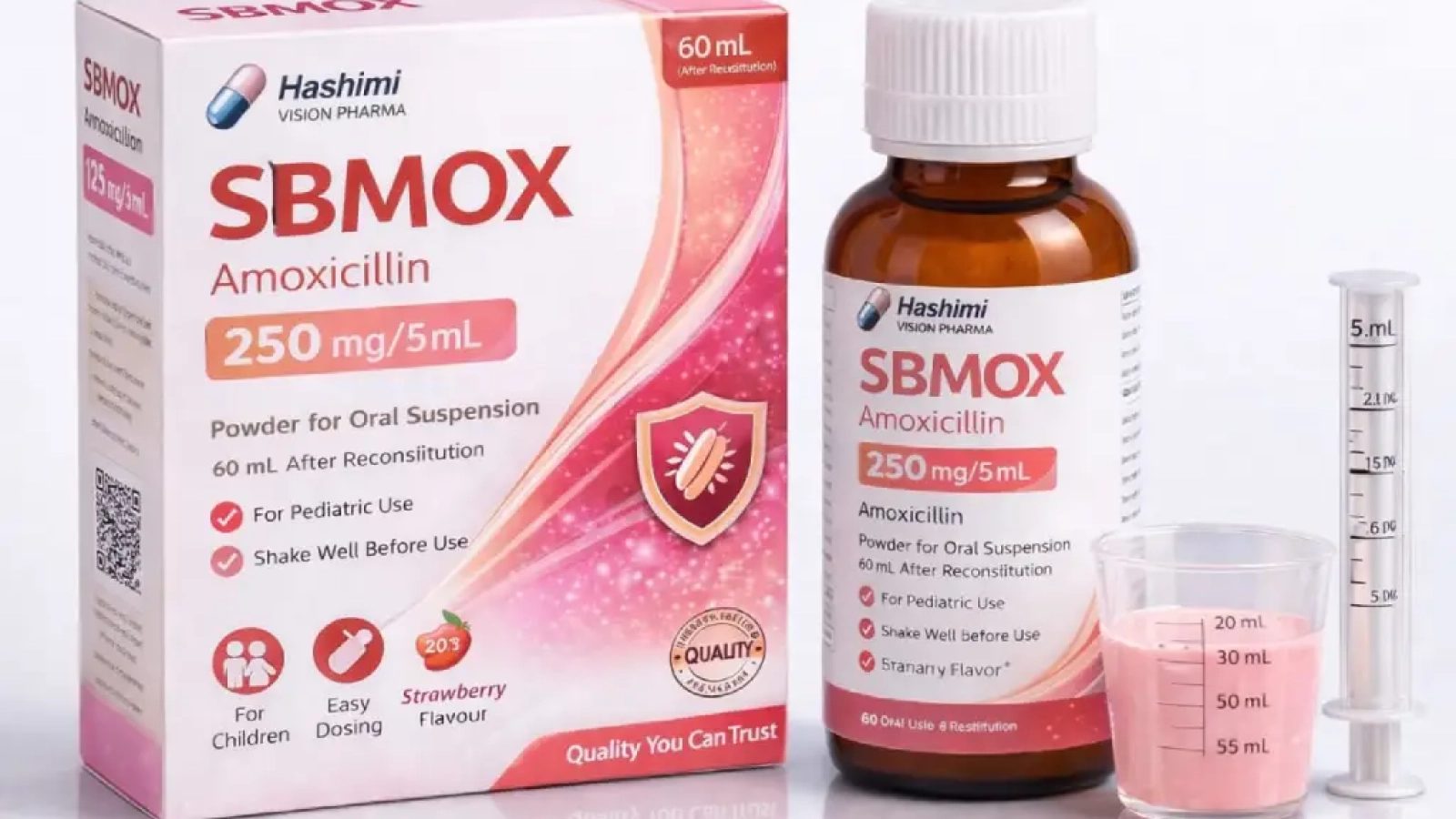
SBMOX Pediatric Suspension

SBMOX Pediatric Suspension
(Amoxicillin 250 mg/5 mL)
Generic Name:
Amoxicillin
Therapeutic Group:
Antibacterial
Drug Category:
Aminopenicillin (Beta-lactam Antibiotic)
Content / Composition:
After reconstitution, each 5 mL contains:
Amoxicillin (as trihydrate) ………… 250 mg
Excipients (including flavoring agents) … q.s.
Indications:
SBMOX Suspension is indicated for the treatment of susceptible bacterial infections in children, including:
Upper respiratory tract infections (tonsillitis, pharyngitis, sinusitis)
Lower respiratory tract infections (bronchitis, pneumonia)
Otitis media
Urinary tract infections (UTIs)
Skin & soft tissue infections
Dental infections
Dosage:
Children:
20–40 mg/kg/day in divided doses (every 8 hours)

25–45 mg/kg/day in divided doses (every 12 hours)
Severe infections:
Up to 80–90 mg/kg/day (as prescribed)
Maximum Dose:
4 g/day
Duration:
5–10 days (depending on infection)
Contraindications:
Hypersensitivity to amoxicillin or penicillins
History of severe allergic reactions to beta-lactam antibiotics
Administration:
For oral use only
Reconstitute with clean water to marked level
Shake well before each use
Use measuring syringe or cup
May be taken with or without food
Drug Interactions:
Allopurinol → increased risk of rash
Oral anticoagulants → increased bleeding risk
Methotrexate → increased toxicity
Oral contraceptives → reduced efficacy (rare)
Compatibility / Clinical Benefits:
Pediatric-friendly formulation
Pleasant strawberry flavor improves compliance
Flexible dosing for mild to severe infections
Well-established safety profile
First-line antibiotic for many pediatric infections
Stability / Storage:
Store dry powder below 25°C
After reconstitution:
Use within 7–14 days
Keep tightly closed
Do not freeze
Protect from light
Precautions:
Use with caution in renal impairment
Monitor for hypersensitivity reactions
Prolonged use may lead to superinfection
Use carefully in patients with history of allergies
Side Effects:
Common:
Diarrhea
Nausea
Vomiting
Uncommon:
Skin rash
Urticaria
Serious (Rare):
Anaphylaxis
Stevens-Johnson Syndrome
Antibiotic-associated colitis
Clinical Advantages:
SBMOX Suspension offers:
Reliable first-line pediatric antibiotic
Flexible dosing for all severity levels
Excellent safety and tolerability
High compliance due to palatable taste
Packaging:
60 mL bottle (after reconstitution)
Measuring cup + oral syringe included

WhatsApp-Image-2026-04-11-at-7.18.28-AM (4)

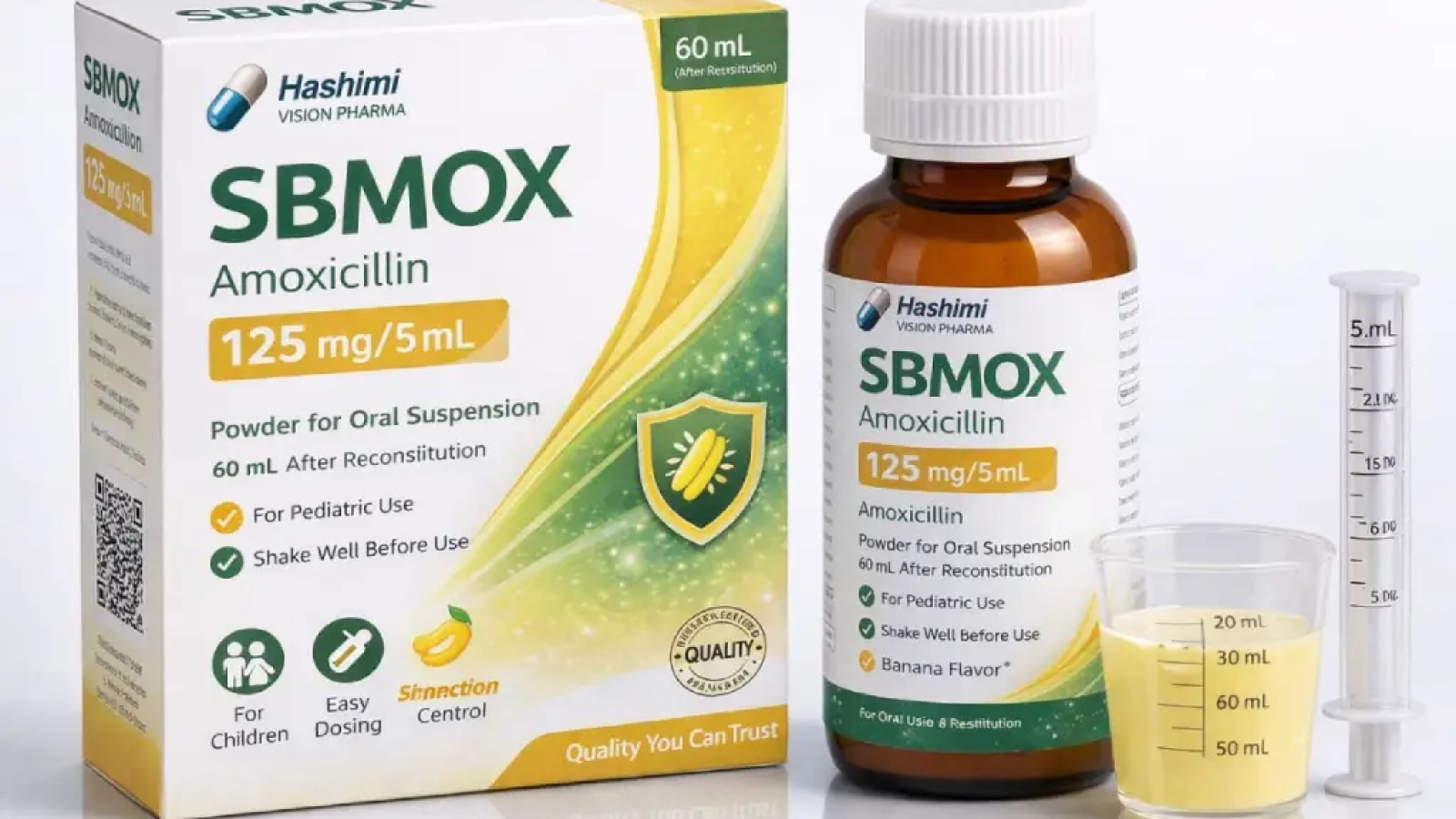
SBMOX Pediatric Suspension

SBMOX Pediatric Suspension
(Amoxicillin 125 mg/5 mL)
Generic Name:
Amoxicillin
Therapeutic Group:
Antibacterial
Drug Category:
Aminopenicillin (Beta-lactam Antibiotic)
Content / Composition:
After reconstitution, each 5 mL contains:
Amoxicillin (as trihydrate) ………… 125 mg
Excipients (including flavoring agents) … q.s.
Indications:
SBMOX 125 mg/5 mL Suspension is indicated for pediatric use in:
Upper respiratory tract infections (pharyngitis, tonsillitis, sinusitis)
Lower respiratory tract infections (bronchitis, pneumonia)
Otitis media
Urinary tract infections (UTIs)
Skin & soft tissue infections
Dental infections
Dosage:
Children:
20–40 mg/kg/day in divided doses every 8 hours

25–45 mg/kg/day in divided doses every 12 hours
Severe infections:
Up to 80–90 mg/kg/day (as prescribed)
(125 mg/5 mL)
Contraindications:
Hypersensitivity to amoxicillin or penicillins
History of severe allergic reactions to beta-lactam antibiotics
Administration:
For oral use only
Reconstitute with clean water up to marked level
Shake well before each use
Use measuring syringe or cup
Can be taken with or without food
Drug Interactions:
Allopurinol → increased risk of rash
Anticoagulants → increased bleeding risk
Methotrexate → increased toxicity
Oral contraceptives (rare)
Compatibility / Clinical Benefits:
Easy dosing (low-strength flexibility)
Pleasant banana flavor improves compliance
Widely used first-line antibiotic
Safe and well tolerated
Stability / Storage:
Store dry powder below 25°C
After reconstitution:
Use within 7–14 days
Keep tightly closed
Do not freeze
Protect from light
Precautions:
Use with caution in renal impairment
Monitor for allergic reactions
Risk of superinfection with prolonged use
Use carefully in patients with history of asthma/allergy
Side Effects:
Common:
Diarrhea
Nausea
Vomiting
Uncommon:
Skin rash
Urticaria
Serious (Rare):
Anaphylaxis
Stevens-Johnson Syndrome
Antibiotic-associated colitis
Clinical Advantages:
SBMOX 125 mg/5 mL provides:
Precise dosing for infants & toddlers
High safety profile
Better compliance due to palatable taste
Effective treatment for common pediatric infections
Packaging:
60 mL bottle (after reconstitution)
Measuring cup + oral syringe included

WhatsApp-Image-2026-04-11-at-7.18.28-AM (3)

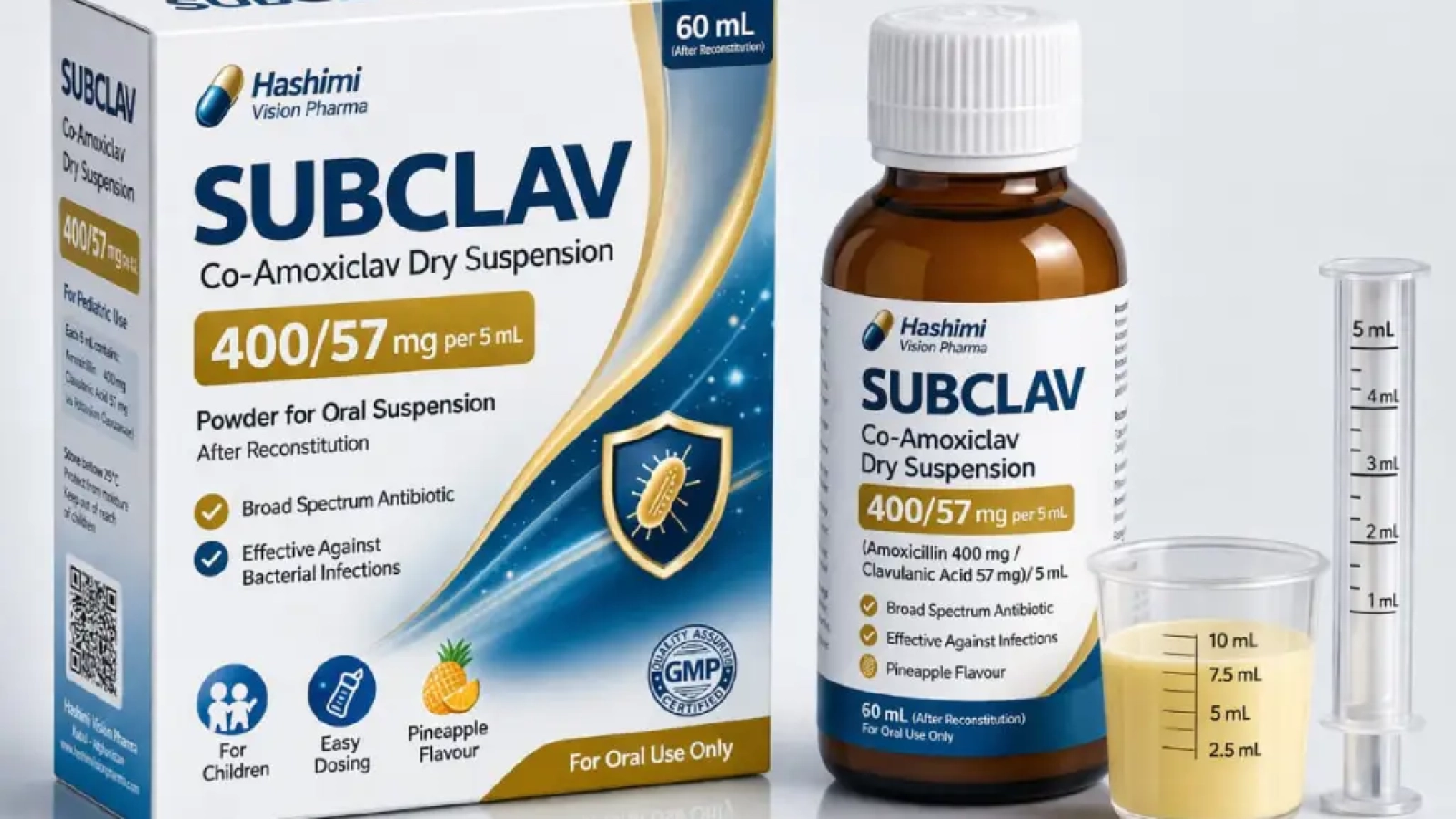
SUBCLAV Pediatric Suspension

SUBCLAV Pediatric Suspension
(Co-Amoxiclav 400 mg / 57 mg per 5 mL)
(Amoxicillin + Clavulanic Acid)
Generic Name:
Amoxicillin + Clavulanic Acid
Therapeutic Group:
Antibacterial
Drug Category:
Beta-lactam Antibiotic Combination (Aminopenicillin + Beta-lactamase Inhibitor)
Content / Composition:
After reconstitution, each 5 mL contains:
Amoxicillin (as trihydrate) ………… 400 mg
Clavulanic Acid (as potassium clavulanate) ………… 57 mg
Excipients ………………………………… q.s.
Indications:
SUBCLAV Suspension is indicated for pediatric treatment of infections caused by beta-lactamase producing organisms:
Upper respiratory tract infections (sinusitis, tonsillitis)
Lower respiratory tract infections (bronchitis, pneumonia)
Otitis media
Urinary tract infections (UTIs)
Skin & soft tissue infections
Dental infections
Dosage:
Children (≥ 3 months):
Based on amoxicillin component:
25–45 mg/kg/day divided every 12 hours
Severe infections:
Up to 45 mg/kg/day (in 2 divided doses)
Important:
Use dosing syringe for accuracy
Do not exceed recommended clavulanate exposure
Contraindications:
Hypersensitivity to penicillins or beta-lactam antibiotics
History of cholestatic jaundice or hepatic dysfunction associated with co-amoxiclav
Administration:
For oral use only
Reconstitute with clean water up to mark
Shake well before each use
Administer at the start of meals (improves tolerance)
Complete full course
Drug Interactions:
Allopurinol → increased risk of rash
Anticoagulants → prolonged bleeding time
Methotrexate → increased toxicity
Probenecid → increases amoxicillin levels
Compatibility / Clinical Benefits:
Broad-spectrum coverage including resistant bacteria
Effective against beta-lactamase producing organisms
Pediatric-friendly formulation
Improved clinical outcomes in resistant infections
Twice daily dosing improves compliance
Stability / Storage:
Store dry powder below 25°C
After reconstitution:
Refrigeration preferred (2–8°C)
Use within 7–10 days
Keep tightly closed
Do not freeze
Precautions:
Use with caution in hepatic impairment
Monitor liver function in prolonged use
Risk of antibiotic-associated diarrhea
Use cautiously in renal impairment
Avoid unnecessary prolonged therapy
Side Effects:
Common:
Diarrhea
Nausea
Vomiting
Uncommon:
Rash
Oral candidiasis
Serious (Rare):
Hepatic dysfunction
Anaphylaxis
Stevens-Johnson Syndrome
Pseudomembranous colitis
Clinical Advantages:
SUBCLAV provides:
Enhanced antibacterial spectrum
Effective against resistant infections
Combination therapy in single formulation
Improved pediatric compliance
Packaging:
60 mL bottle (after reconstitution)
Measuring cup + oral syringe included

WhatsApp-Image-2026-04-11-at-7.18.28-AM (1)

SUBCLAV Pediatric Suspension

SUBCLAV Pediatric Suspension
(Co-Amoxiclav 312.5 mg per 5 mL)
(Amoxicillin 250 mg + Clavulanic Acid 62.5 mg equivalent formulation)
Generic Name:
Amoxicillin + Clavulanic Acid
Therapeutic Group:
Antibacterial
Drug Category:
Beta-lactam Antibiotic Combination
(Aminopenicillin + Beta-lactamase Inhibitor)
Content / Composition:
After reconstitution, each 5 mL contains:
Amoxicillin (as trihydrate) ………… 250 mg
Clavulanic Acid (as potassium clavulanate) ………… 62.5 mg
Excipients ………………………………… q.s.
Indications:
SUBCLAV Suspension is indicated in pediatric patients for infections caused by beta-lactamase producing bacteria:
Upper respiratory tract infections (sinusitis, tonsillitis)
Lower respiratory tract infections (bronchitis, pneumonia)
Otitis media
Urinary tract infections (UTIs)
Skin & soft tissue infections
Dental infections
Dosage:
Children (≥ 3 months):
Based on amoxicillin component:
25–45 mg/kg/day divided every 12 hours
Severe infections:
Up to 45 mg/kg/day in 2 divided doses
Important Note:
Dose carefully to avoid excess clavulanate exposure
Always use calibrated measuring device
Contraindications:
Hypersensitivity to penicillins or beta-lactams
History of cholestatic jaundice or hepatic dysfunction due to co-amoxiclav
Administration:
For oral use only
Reconstitute with clean water up to indicated mark
Shake well before each use
Administer at the start of meals (reduces GI side effects)
Complete full course of therapy
Drug Interactions:
Allopurinol → increased risk of rash
Oral anticoagulants → prolonged bleeding
Methotrexate → increased toxicity
Probenecid → increases amoxicillin levels
Compatibility / Clinical Benefits:
Broad-spectrum antibacterial activity
Effective against resistant organisms
Optimized pediatric dosing strength
Better tolerability with food administration
Suitable for moderate to severe infections
Stability / Storage:
Store dry powder below 25°C
After reconstitution:
Preferably refrigerate (2–8°C)
Use within 7–10 days
Keep tightly closed
Do not freeze
Precautions:
Use with caution in hepatic impairment
Monitor liver function in prolonged therapy
Risk of antibiotic-associated diarrhea
Use carefully in renal impairment
Avoid unnecessary prolonged use
Side Effects:
Common:
Diarrhea
Nausea
Vomiting
Uncommon:
Skin rash
Oral candidiasis
Serious (Rare):
Hepatic dysfunction
Anaphylaxis
Stevens-Johnson Syndrome
Pseudomembranous colitis
Clinical Advantages:
SUBCLAV 312.5 mg/5 mL offers:
Balanced combination strength for pediatrics
Effective treatment of resistant infections
Improved dosing accuracy
High compliance due to palatable flavor
Packaging:
60 mL bottle (after reconstitution)
Measuring cup + oral syringe included

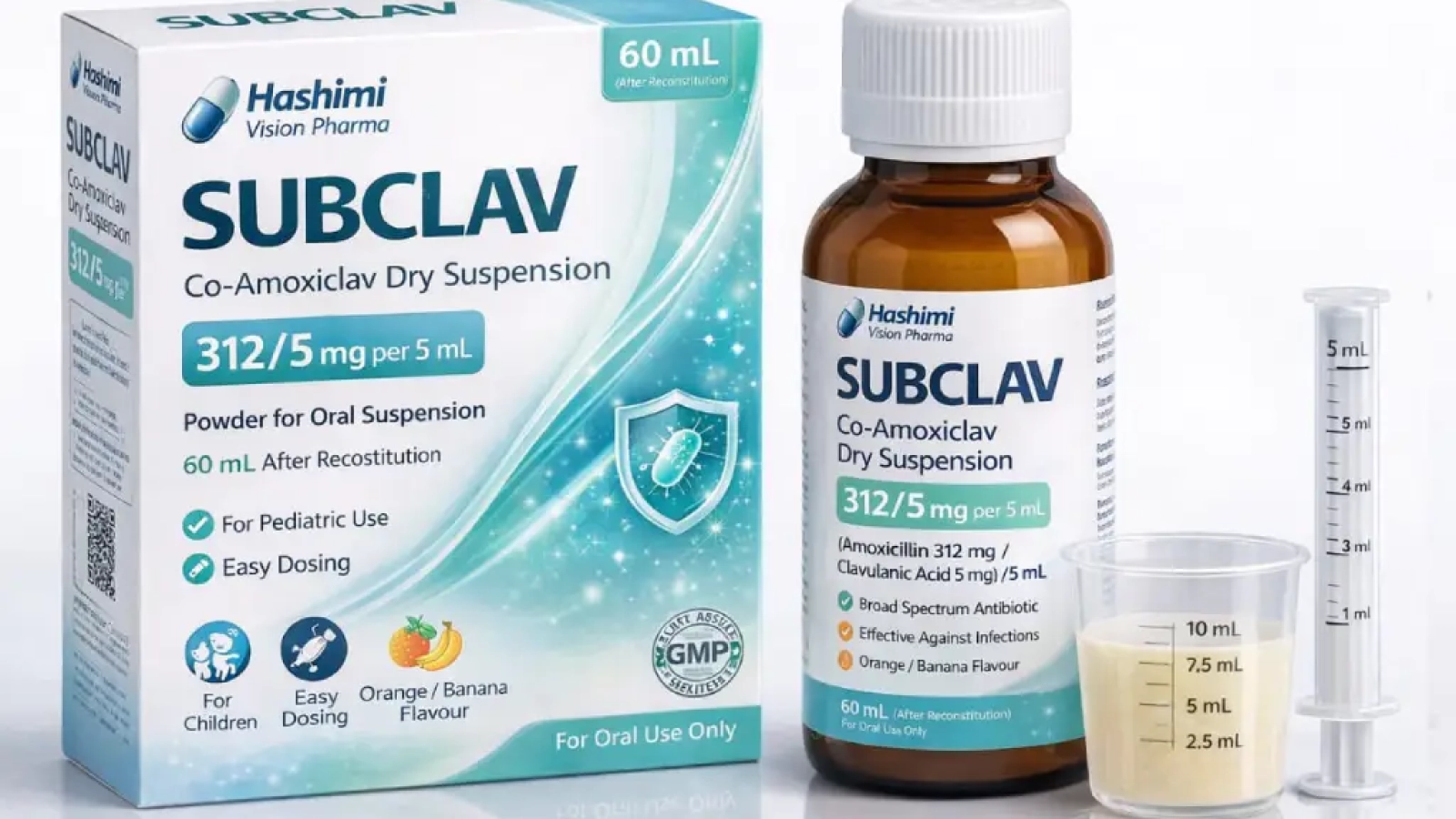
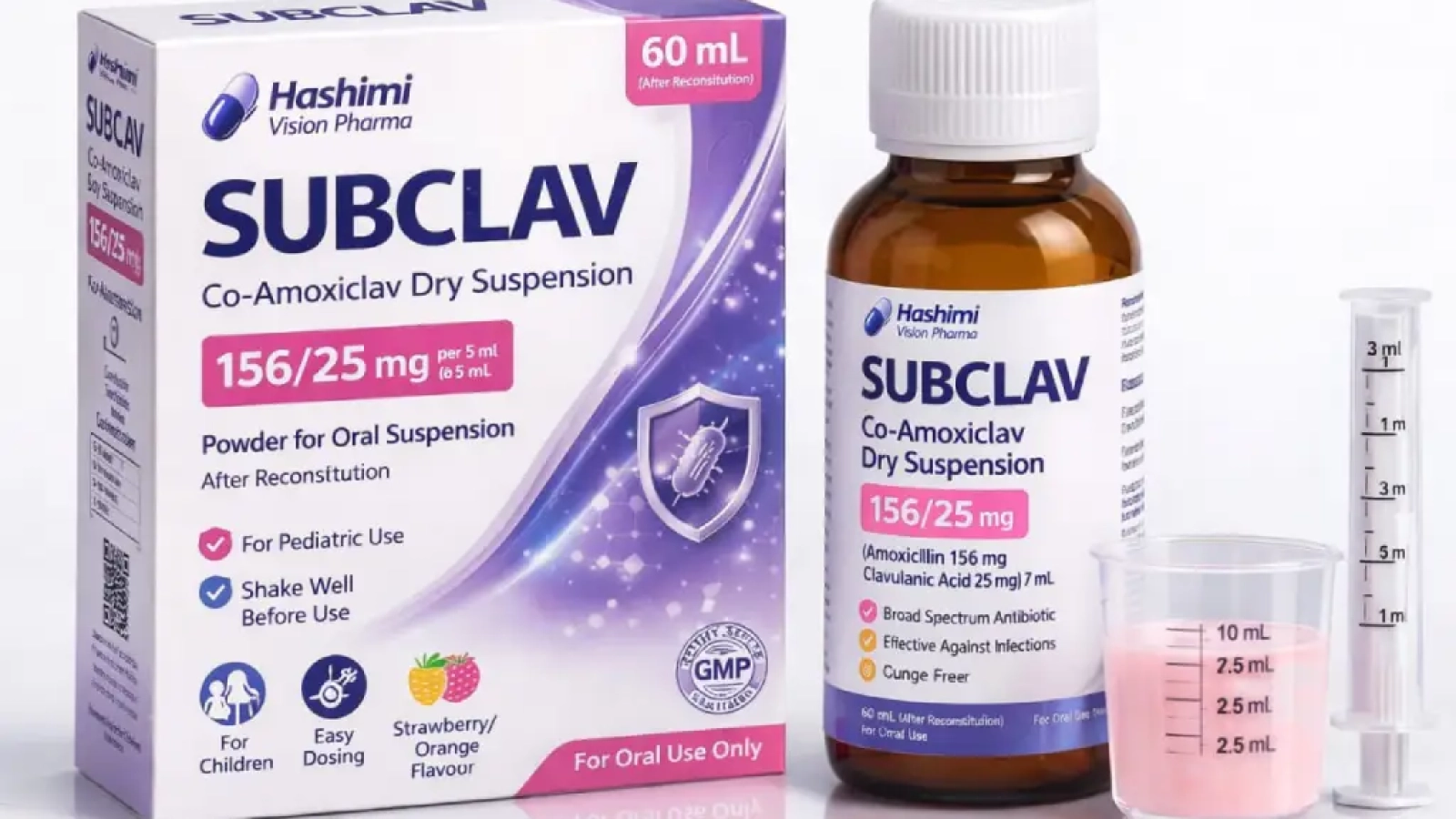
WhatsApp-Image-2026-04-11-at-7.18.28-AM

SUBCLAV Pediatric Suspension

SUBCLAV Pediatric Suspension
(Co-Amoxiclav 156 mg / 25 mg per 5 mL)
(Amoxicillin + Clavulanic Acid)
Generic Name:
Amoxicillin + Clavulanic Acid
Therapeutic Group:
Antibacterial
Drug Category:
Beta-lactam Antibiotic Combination
(Aminopenicillin + Beta-lactamase Inhibitor)
Content / Composition:
After reconstitution, each 5 mL contains:
Amoxicillin (as trihydrate) ………… 156 mg
Clavulanic Acid (as potassium clavulanate) ………… 25 mg
Excipients ………………………………… q.s.
Indications:
Indicated in pediatric patients for treatment of infections caused by beta-lactamase producing organisms:
Upper respiratory tract infections (tonsillitis, sinusitis)
Lower respiratory tract infections (bronchitis, pneumonia)
Acute otitis media
Urinary tract infections
Skin & soft tissue infections
Dental infections
Dosage:
Children (≥ 3 months):
Based on amoxicillin component:
20–40 mg/kg/day divided every 8–12 hours
Mild to Moderate infections:
20–25 mg/kg/day
Severe infections:
Up to 40 mg/kg/day
⚠️ Dose must be adjusted based on body weight and severity
Contraindications:
Hypersensitivity to penicillins or beta-lactams
History of co-amoxiclav-related hepatic dysfunction or jaundice
Administration:
Oral use only
Reconstitute with boiled & cooled water up to mark
Shake well before each dose
Administer at the beginning of meals
Complete full treatment course
Drug Interactions:
Allopurinol → ↑ risk of rash
Warfarin / anticoagulants → ↑ bleeding risk
Methotrexate → ↑ toxicity
Probenecid → ↑ amoxicillin levels
Compatibility / Clinical Benefits:
Effective against beta-lactamase producing bacteria
Suitable for pediatric use (low clavulanate dose → better tolerability)
Broad-spectrum antibacterial coverage
Improved compliance due to pleasant flavor
Stability / Storage:
Store dry powder below 25°C
After reconstitution:
Keep refrigerated (2–8°C preferred)
Use within 7 days
Do not freeze
Keep bottle tightly closed
Precautions:
Use cautiously in hepatic impairment
Monitor liver function in prolonged therapy
Risk of antibiotic-associated diarrhea
Use with caution in renal impairment
Avoid unnecessary prolonged use
Side Effects:
Common:
Diarrhea
Nausea
Vomiting
Uncommon:
Rash
Oral thrush
Serious (Rare):
Hepatic dysfunction
Hypersensitivity reactions
Stevens-Johnson Syndrome
Pseudomembranous colitis
Clinical Advantages:
SUBCLAV 156/25 mg is specially designed for:
Young pediatric patients
Better GI tolerability (low clavulanate ratio)
Safe and effective early-line antibiotic therapy
Packaging:
60 mL bottle (after reconstitution)
Measuring cup + oral syringe included

WhatsApp-Image-2026-04-11-at-7.18.33-AM-1 (2) (32)

RABEEDON-L® Capsules

[7:58 PM, 4/28/2026] +93 79 666 5158: SERT-H® 50 mg Tablets
Generic Name:
Sertraline Hydrochloride
Therapeutic Group:
Central Nervous System (CNS) Agent / Antidepressant
Drug Category:
Selective Serotonin Reuptake Inhibitor (SSRI)
Content / Composition:
Each film-coated tablet contains:
Sertraline Hydrochloride equivalent to Sertraline 50 mg
Indications:
Indicated for the treatment of:
* Major Depressive Disorder (MDD)
* Generalized Anxiety Disorder (GAD)
* Panic Disorder
* Obsessive-Compulsive Disorder (OCD)
* Post-Traumatic Stress Disorder (PTSD)
* Social Anxiety Disorder
Dosage:
Adults:
Initial dose: 50 mg once daily
May be increased gradually up to a maximum of 200 mg/day based on clinical response.
Dose adjustments should be made at intervals of at least one week.
Contraindications:
* Hypersensiti…
[8:03 PM, 4/28/2026] +93 79 666 5158: KLASSIC-K7® Tablets
Generic Name:
Vitamin D3 (Cholecalciferol) + Calcium + Magnesium + Zinc + Vitamin K2 (MK-7)
Therapeutic Group:
Nutritional Supplement / Bone Health & Mineral Support
Drug Category:
Vitamin & Mineral Combination (Bone Metabolism Regulator)
Content / Composition:
Each tablet contains:
* Vitamin D3 (Cholecalciferol) …… 2000 IU
* Calcium (as Calcium Carbonate) …… 600 mg
* Magnesium …… 200 mg
* Zinc …… 15 mg
* Vitamin K2 (MK-7) …… 90 mcg
Indications:
Indicated for prevention and treatment of deficiencies and for:
* Bone health and osteoporosis prevention
* Strengthening teeth and skeletal system
* Supporting immune system function
* Muscle strength and neuromuscular function
* Reducing fatigue and weakness
* Improving calcium absorption and bone minerali…
[8:06 PM, 4/28/2026] +93 79 666 5158: Celco-H® 200 mg Capsules
Generic Name:
Celecoxib
Therapeutic Group:
Analgesic & Anti-inflammatory (NSAID)
Drug Category:
Selective COX-2 Inhibitor (Non-Steroidal Anti-Inflammatory Drug)
Content / Composition:
Each capsule contains:
Celecoxib 200 mg
Indications:
Indicated for the relief of pain and inflammation in:
* Osteoarthritis
* Rheumatoid Arthritis
* Ankylosing Spondylitis
* Acute Pain
* Primary Dysmenorrhea (Menstrual Pain)
Dosage:
Adults:
* Osteoarthritis: 200 mg once daily or in divided doses
* Rheumatoid Arthritis: 100–200 mg twice daily
* Acute Pain: Initial 400 mg, followed by 200 mg if needed
* Dysmenorrhea: 400 mg initially, then 200 mg as required
Maximum daily dose: As prescribed by physician (usually not exceeding 400 mg/day).
Contraindications:
* Hype…
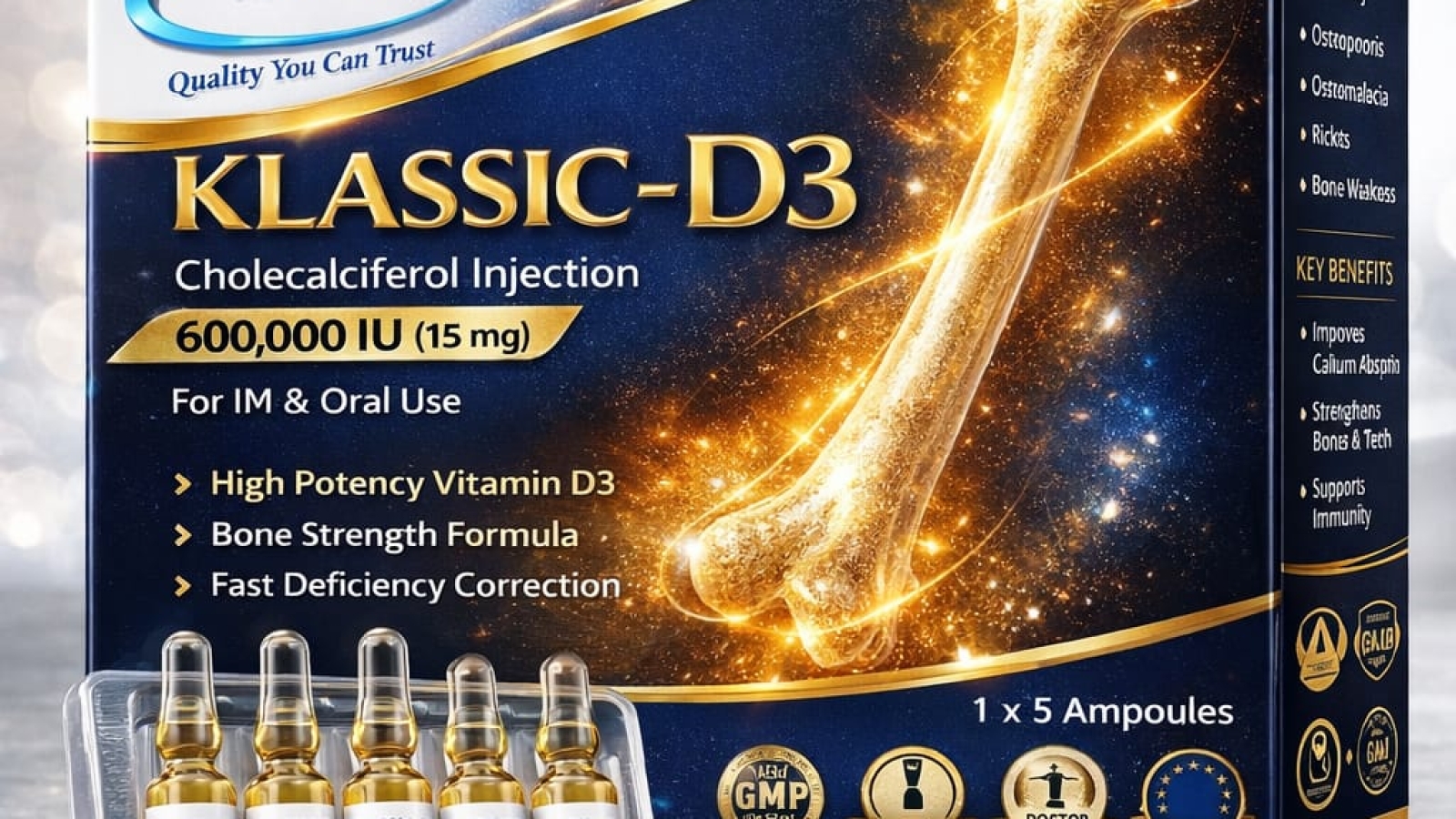
[8:16 PM, 4/28/2026] +93 79 666 5158: KLASSIC-D3® Injection 600,000 IU
Generic Name:
Cholecalciferol (Vitamin D3)
Therapeutic Group:
Vitamin Supplement / Bone Metabolism Regulator
Drug Category:
Fat-Soluble Vitamin (Vitamin D Analog)
Content / Composition:
Each ampoule contains:
Cholecalciferol (Vitamin D3) …… 600,000 IU (15 mg)
Indications:
Indicated for prevention and treatment of Vitamin D deficiency and related conditions:
* Vitamin D deficiency
* Osteoporosis
* Osteomalacia
* Rickets
* Bone weakness and fractures
* Hypocalcemia related to Vitamin D deficiency
Dosage:
As directed by the physician.
Common regimen:
* Single IM dose of 600,000 IU
* May be repeated after several weeks or months based on clinical need
Contraindications:
* Hypersensitivity to Vitamin D3 or any component
* Hypercalcemia or h…
[8:18 PM, 4/28/2026] +93 79 666 5158: Heli Sure-H® Kit (7-Day Therapy)
Generic Name:
Lansoprazole + Clarithromycin + Amoxicillin + Tinidazole
Therapeutic Group:
Anti-ulcer / Anti-infective Combination Therapy
Drug Category:
Proton Pump Inhibitor (PPI) + Macrolide Antibiotic + Penicillin Antibiotic + Nitroimidazole Antibiotic
Content / Composition:
Each daily regimen contains:
* Lansoprazole …… 30 mg
* Clarithromycin …… 500 mg
* Amoxicillin …… 1 g
* Tinidazole …… 500 mg
(Provided in morning and evening doses for 7 days)
Indications:
Indicated for eradication of Helicobacter pylori infection and treatment of:
* Peptic ulcer disease (gastric & duodenal ulcers)
* H. pylori-associated gastritis
* Prevention of ulcer recurrence
* Dyspepsia associated with H. pylori
Dosage:
Adults (Standard Regimen):
* Twice da…
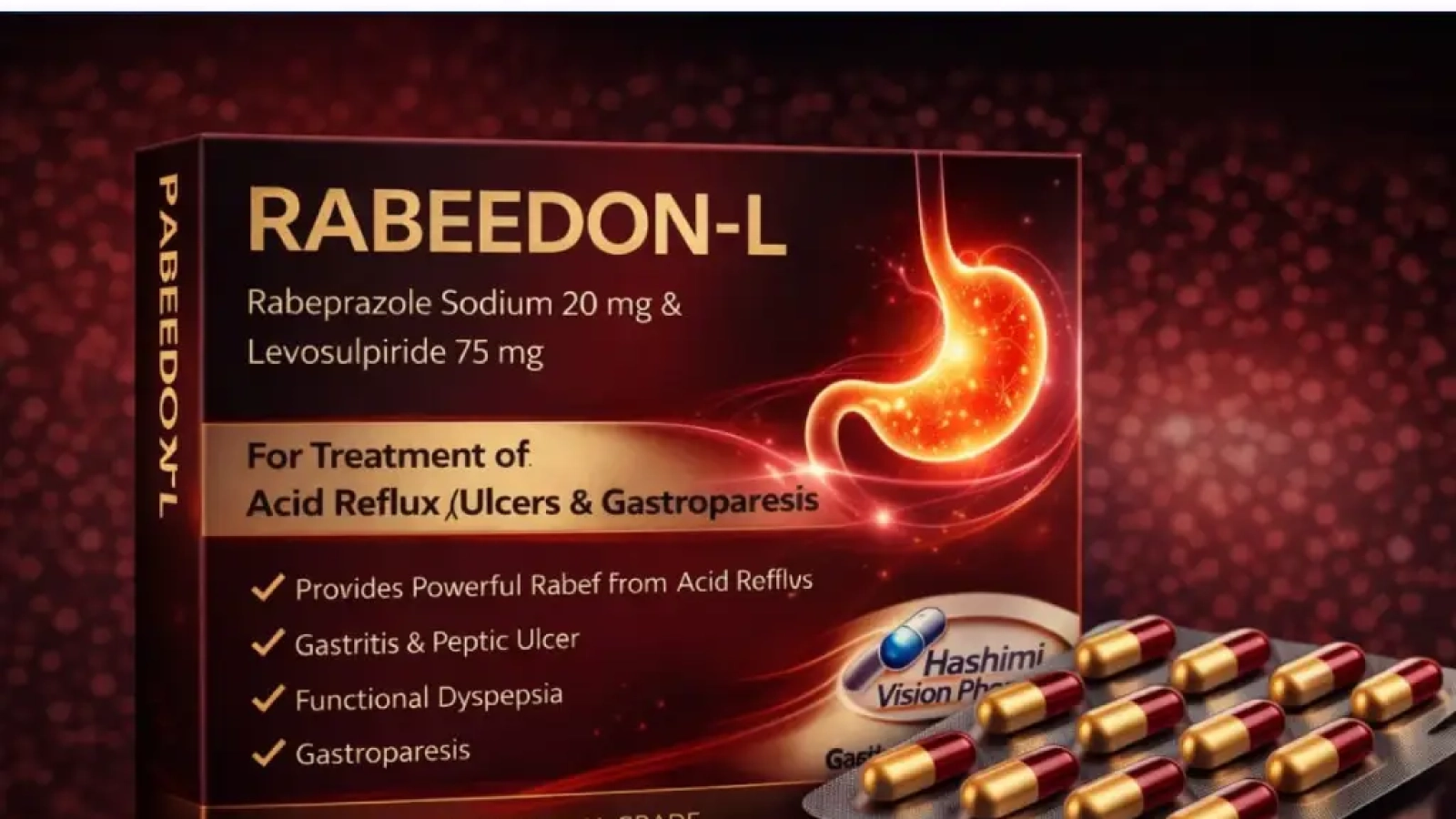
[8:20 PM, 4/28/2026] +93 79 666 5158: RABEEDON-L® Capsules
Generic Name:
Rabeprazole Sodium + Levosulpiride
Therapeutic Group:
Gastrointestinal Therapy / Anti-ulcer & Prokinetic Combination
Drug Category:
Proton Pump Inhibitor (PPI) + Dopamine Antagonist (Prokinetic Agent)
Content / Composition:
Each capsule contains:
* Rabeprazole Sodium …… 20 mg
* Levosulpiride …… 75 mg
Indications:
Indicated for the management of acid-related and gastrointestinal motility disorders, including:
* Gastroesophageal Reflux Disease (GERD)
* Gastritis and Peptic Ulcer Disease
* Functional Dyspepsia
* Acid reflux and heartburn
* Gastroparesis
* Bloating, nausea, and indigestion
Dosage:
Adults:
One capsule once daily, preferably before meals
(Usually taken before breakfast or as directed by physician)
Contraindications:
* Hypersensitivity to rabeprazole, levosulpiride, or any component
* Gastrointestinal bleeding, obstruction, or perforation
* Prolactin-dependent tumors (e.g., prolactinoma)
* Epilepsy or seizure disorders
* Severe renal impairment (use with caution)
Administration:
For oral use.
Swallow capsule whole with water.
Do not crush or chew.
Preferably take 20–30 minutes before meals.
Interaction:
Use caution with:
* CNS-active drugs (levosulpiride interaction)
* Antacids (timing adjustment may be needed)
* Drugs dependent on gastric pH for absorption
* Levodopa (reduced effect due to dopamine antagonism)
* Alcohol (avoid)
Compatibility:
Compatible with standard gastrointestinal therapies under medical supervision.
Avoid unnecessary combination with other PPIs or prokinetic agents.
Stability / Storage:
Store below 25°C.
Protect from light and moisture.
Keep out of reach of children.
Precautions:
* Long-term use of PPIs may cause vitamin B12 deficiency
* Monitor for extrapyramidal symptoms (rare, due to levosulpiride)
* Use cautiously in elderly patients
* Pregnancy & lactation: use only if prescribed
* Avoid prolonged use without medical supervision
Side Effects:
Common:
* Headache
* Nausea
* Abdominal discomfort
* Diarrhea or constipation
Others:
* Dizziness
* Fatigue
* Sleep disturbances
Rare but serious:
* Extrapyramidal symptoms (tremor, rigidity)
* Elevated prolactin levels
* Allergic reactions
Website Note:
For professional use only.
Use under medical supervision.
Not intended for long-term self-medication.

WhatsApp Image 2026-04-28 at 8.18.42 PM (2)

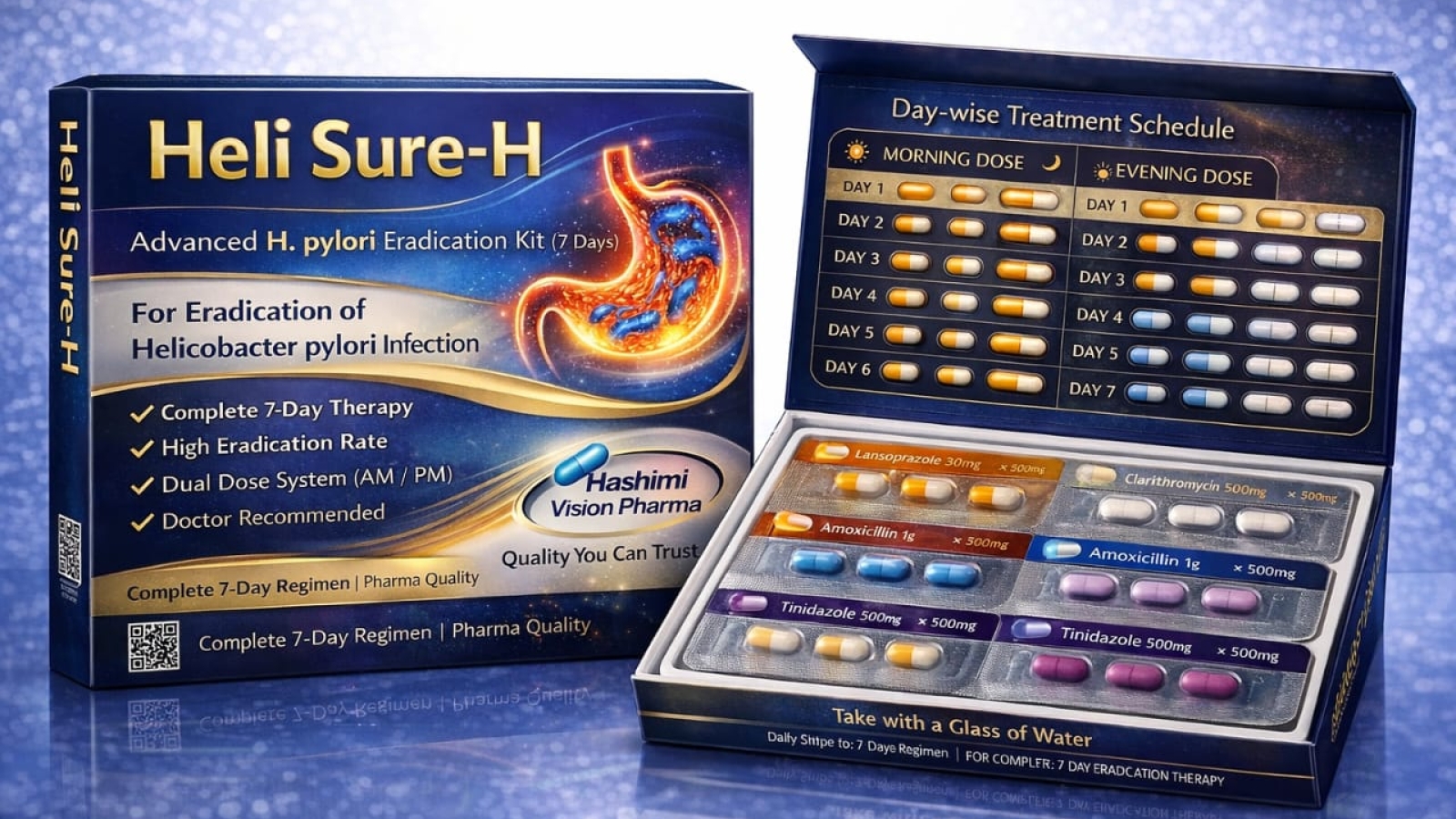
Heli Sure-H® Kit (7-Day Therapy)

Heli Sure-H® Kit (7-Day Therapy)
Generic Name:
Lansoprazole + Clarithromycin + Amoxicillin + Tinidazole
Therapeutic Group:
Anti-ulcer / Anti-infective Combination Therapy
Drug Category:
Proton Pump Inhibitor (PPI) + Macrolide Antibiotic + Penicillin Antibiotic + Nitroimidazole Antibiotic
Content / Composition:
Each daily regimen contains:
* Lansoprazole …… 30 mg
* Clarithromycin …… 500 mg
* Amoxicillin …… 1 g
* Tinidazole …… 500 mg
(Provided in morning and evening doses for 7 days)
Indications:
Indicated for eradication of Helicobacter pylori infection and treatment of:
* Peptic ulcer disease (gastric & duodenal ulcers)
* H. pylori-associated gastritis
* Prevention of ulcer recurrence
* Dyspepsia associated with H. pylori
Dosage:
Adults (Standard Regimen):
* Twice daily (Morning & Evening) for 7 days
* Follow the day-wise blister pack instructions
(As directed by physician depending on resistance pattern)
Contraindications:
* Hypersensitivity to any component (macrolides, penicillins, nitroimidazoles)
* Severe hepatic impairment
* History of cholestatic jaundice with clarithromycin
* Concurrent use with drugs contraindicated with clarithromycin (e.g., certain statins, ergot derivatives)
Administration:
* Oral use
* Take after meals with a full glass of water
* Follow the exact day-wise schedule
* Complete full course (even if symptoms improve)
Interaction:
Use caution with:
* Warfarin (↑ bleeding risk)
* CYP3A4 substrates (clarithromycin interaction)
* Alcohol (avoid with tinidazole)
* Antacids (reduce PPI absorption timing)
* Oral contraceptives (reduced effectiveness possible)
Compatibility:
Designed as a fixed therapy kit – components are optimized for combined use.
Do not combine with additional antibiotics unless prescribed.
Stability / Storage:
Store below 25°C.
Protect from moisture and direct sunlight.
Keep in original packaging.
Precautions:
* Ensure patient compliance for full eradication
* Consider local antibiotic resistance patterns
* Use with caution in liver and renal impairment
* Avoid alcohol during and at least 72 hours after therapy
* Monitor for severe diarrhea (possible C. difficile infection)
* Use in pregnancy/lactation only if prescribed
Side Effects:
Common:
* Nausea, vomiting
* Diarrhea
* Abdominal discomfort
* Metallic taste (tinidazole)
Others:
* Headache
* Dizziness
* Rash
Serious (rare):
* Severe allergic reactions
* Hepatic dysfunction
* QT prolongation (clarithromycin)
* Antibiotic-associated colitis
Website Note:
Complete 7-day eradication kit.
For prescription use only.
Ensure full course completion for maximum eradication success.

WhatsApp Image 2026-04-28 at 8.16.33 PM

KLASSIC-D3® Injection 600,000 IU

KLASSIC-D3® Injection 600,000 IU
Generic Name:
Cholecalciferol (Vitamin D3)
Therapeutic Group:
Vitamin Supplement / Bone Metabolism Regulator
Drug Category:
Fat-Soluble Vitamin (Vitamin D Analog)
Content / Composition:
Each ampoule contains:
Cholecalciferol (Vitamin D3) …… 600,000 IU (15 mg)
Indications:
Indicated for prevention and treatment of Vitamin D deficiency and related conditions:
* Vitamin D deficiency
* Osteoporosis
* Osteomalacia
* Rickets
* Bone weakness and fractures
* Hypocalcemia related to Vitamin D deficiency
Dosage:
As directed by the physician.
Common regimen:
* Single IM dose of 600,000 IU
* May be repeated after several weeks or months based on clinical need
Contraindications:
* Hypersensitivity to Vitamin D3 or any component
* Hypercalcemia or hypervitaminosis D
* Severe renal impairment
* Conditions with increased calcium levels (e.g., sarcoidosis)
Administration:
* For Intramuscular (IM) injection or oral use (as directed)
* Should be administered by healthcare professional (IM route)
* Do not inject intravenously
Interaction:
Use caution with:
* Thiazide diuretics (increase calcium levels)
* Digitalis glycosides (risk of arrhythmia)
* Calcium supplements (risk of hypercalcemia)
* Corticosteroids (may reduce Vitamin D effect)
Compatibility:
Compatible with standard Vitamin and mineral therapies under medical supervision.
Avoid concurrent high-dose Vitamin D products unless prescribed.
Stability / Storage:
Store below 25°C.
Protect from light.
Do not freeze.
Keep out of reach of children.
Precautions:
* Monitor serum calcium and Vitamin D levels in prolonged use
* Use with caution in renal disease and cardiovascular disorders
* Risk of toxicity with overdose
* Pregnancy and lactation: use only if prescribed
* Avoid repeated high doses without monitoring
Side Effects:
Usually well tolerated when used as directed.
Possible adverse effects include:
* Hypercalcemia (nausea, vomiting, constipation)
* Headache
* Weakness
* Increased thirst and urination
* Rare allergic reactions
Website Note:
For professional use only.
High-potency Vitamin D preparation.
Use strictly under medical supervision.