WhatsApp-Image-2026-04-11-at-7.18.28-AM (50)

LEEVOXY® 750 Tablets

LEEVOXY® 750 Tablets
Generic Name:
Levofloxacin
Therapeutic Group:
Anti-infective
Drug Category:
Fluoroquinolone Antibiotic (Third Generation)
Content / Composition:
Each film-coated tablet contains:
* Levofloxacin …… 750 mg
Indications:
Indicated for the treatment of:
* Community-acquired pneumonia (CAP)
* Acute bacterial sinusitis
* Acute exacerbation of chronic bronchitis
* Urinary tract infections (complicated & uncomplicated)
* Pyelonephritis
* Skin and soft tissue infections
* Prostatitis
Dosage:
As directed by the physician.
Typical dosing:
* 750 mg once daily
* Duration: 5–14 days depending on infection type and severity
Contraindications:
* Hypersensitivity to levofloxacin or other fluoroquinolones
* History of tendon disorders related to quinolones
* Epilepsy or seizure disorders
* Pregnancy and lactation
* Pediatric patients
Administration:
For oral use.
* Take once daily, with or without food
* Swallow with sufficient water
* Avoid simultaneous intake with antacids, iron, zinc, or dairy products
Interaction:
* Antacids (Al/Mg), calcium, iron → reduce absorption
* Warfarin → increased bleeding risk (monitor INR)
* NSAIDs → increased CNS stimulation risk
* Corticosteroids → increased risk of tendon rupture
* QT-prolonging drugs → cardiac risk
Compatibility:
Compatible with most antibacterial therapies
Avoid co-administration with absorption-reducing agents
Stability / Storage:
Store below 25°C
Protect from light and moisture
Keep out of reach of children
Precautions:
* Risk of tendonitis and tendon rupture (higher in elderly)
* Use cautiously in renal impairment (dose adjustment required)
* Avoid excessive sunlight exposure (photosensitivity)
* Monitor CNS effects (dizziness, confusion)
* Risk of QT prolongation in susceptible patients
* Discontinue if severe diarrhea occurs
Side Effects:
Common:
* Nausea
* Diarrhea
* Headache
* Dizziness
Less common:
* Insomnia
* Skin rash
* Elevated liver enzymes
Serious (rare):
* Tendon rupture
* QT prolongation
* Severe hypersensitivity reactions
* Peripheral neuropathy
* Hepatotoxicity
Professional Web Note:
Levofloxacin is a potent broad-spectrum fluoroquinolone antibiotic offering once-daily dosing, excellent bioavailability, and strong activity against respiratory and urinary pathogens, making it a preferred choice in moderate to severe bacterial infections.


257b25e2-0fad-4b6f-a2e0-3daff9f7ec47

LEEVOXY® 500 Tablets

LEEVOXY® 500 Tablets
Generic Name:
Levofloxacin
Therapeutic Group:
Anti-infective
Drug Category:
Fluoroquinolone Antibiotic (Third Generation)
Content / Composition:
Each film-coated tablet contains:
* Levofloxacin …… 500 mg
Indications:
Indicated for the treatment of:
* Community-acquired pneumonia (CAP)
* Acute bacterial sinusitis
* Acute exacerbation of chronic bronchitis
* Urinary tract infections (UTIs)
* Complicated urinary infections & pyelonephritis
* Skin and soft tissue infections
* Prostatitis
Dosage:
As directed by the physician.
Typical dosing:
* 500 mg once daily
* Duration: usually 5–14 days depending on infection severity
Contraindications:
* Hypersensitivity to levofloxacin or other fluoroquinolones
* History of tendon disorders associated with quinolones
* Epilepsy or seizure disorders
* Pregnancy and lactation
* Pediatric patients
Administration:
For oral use.
* Take once daily with or without food
* Swallow with adequate water
* Avoid co-administration with antacids, calcium, iron, or zinc
Interaction:
* Antacids (Al/Mg), iron, calcium → decrease absorption
* Warfarin → increased bleeding risk (monitor INR)
* NSAIDs → increased CNS stimulation risk
* Corticosteroids → increased tendon rupture risk
* QT-prolonging drugs → increased cardiac risk
Compatibility:
Compatible with most antibacterial therapies
Avoid simultaneous intake with absorption-reducing agents
Stability / Storage:
Store below 25°C
Protect from light and moisture
Keep out of reach of children
Precautions:
* Risk of tendonitis and tendon rupture (especially elderly patients)
* Dose adjustment required in renal impairment
* Avoid prolonged sun exposure (photosensitivity)
* Monitor CNS effects (dizziness, confusion)
* Risk of QT prolongation in predisposed patients
* Discontinue if severe diarrhea occurs
Side Effects:
Common:
* Nausea
* Diarrhea
* Headache
* Dizziness
Less common:
* Insomnia
* Skin rash
* Elevated liver enzymes
Serious (rare):
* Tendon rupture
* QT prolongation
* Severe hypersensitivity reactions
* Peripheral neuropathy
* Hepatotoxicity
Professional Web Note:
Levofloxacin is a highly effective broad-spectrum fluoroquinolone antibiotic with excellent bioavailability, strong activity against respiratory and urinary pathogens, and convenient once-daily dosing for improved patient compliance.

WhatsApp-Image-2026-04-11-at-7.18.28-AM (48)

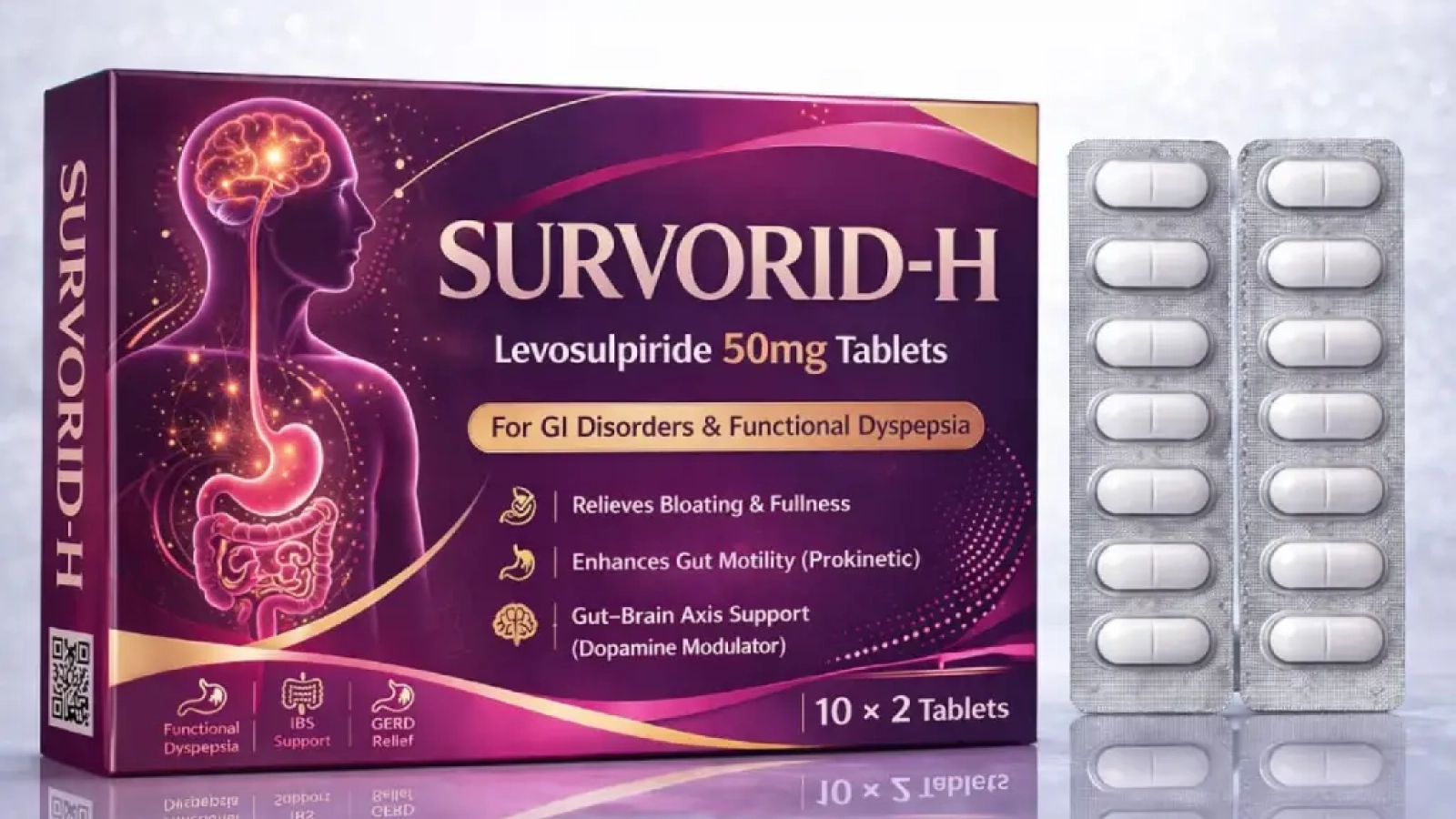
SURVORID-H® Tablets

SURVORID-H® Tablets
Generic Name:
Levosulpiride
Therapeutic Group:
Gastrointestinal (GI) Disorders
Drug Category:
Prokinetic Agent / Dopamine D₂ Receptor Antagonist
Content / Composition:
Each tablet contains:
* Levosulpiride …… 50 mg
Indications:
Indicated for the management of:
* Functional dyspepsia
* Irritable Bowel Syndrome (IBS)
* Gastroesophageal Reflux Disease (GERD)
* Delayed gastric emptying (gastroparesis)
* Nausea and vomiting associated with GI disorders
Dosage:
As directed by the physician.
Typical dosing:
* 25–50 mg, 2–3 times daily before meals
* Dose may vary depending on severity and patient response
Contraindications:
* Hypersensitivity to levosulpiride
* Gastrointestinal hemorrhage, obstruction, or perforation
* Pheochromocytoma
* Epilepsy or seizure disorders
* Prolactin-dependent tumors (e.g., prolactinoma)
Administration:
For oral use.
* Preferably taken before meals
* Swallow with adequate water
* Follow physician’s instructions strictly
Interaction:
* CNS depressants → enhanced sedative effects
* Antihypertensives → additive hypotensive effect
* Dopaminergic drugs (e.g., levodopa) → reduced efficacy
* Alcohol → increased CNS side effects
Compatibility:
Compatible with most GI medications (PPIs, antacids)
Avoid combination with strong CNS depressants where possible
Stability / Storage:
Store below 25°C
Protect from light and moisture
Keep out of reach of children
Precautions:
* Use cautiously in renal impairment (dose adjustment may be required)
* Monitor for extrapyramidal symptoms
* May increase prolactin levels (hyperprolactinemia risk)
* Use with caution in elderly patients
* Avoid prolonged use without medical supervision
Side Effects:
Common:
* Drowsiness
* Fatigue
* Dizziness
Less common:
* Constipation or diarrhea
* Headache
Serious (rare):
* Extrapyramidal symptoms (tremor, rigidity)
* Hyperprolactinemia (galactorrhea, gynecomastia)
* Menstrual irregularities
Professional Web Note:
Levosulpiride is a selective dopamine D₂ receptor antagonist with dual prokinetic and anti-dyspeptic action, enhancing gastrointestinal motility while improving gut–brain axis function, making it highly effective in functional GI disorders.

WhatsApp-Image-2026-04-11-at-7.18.28-AM (47)

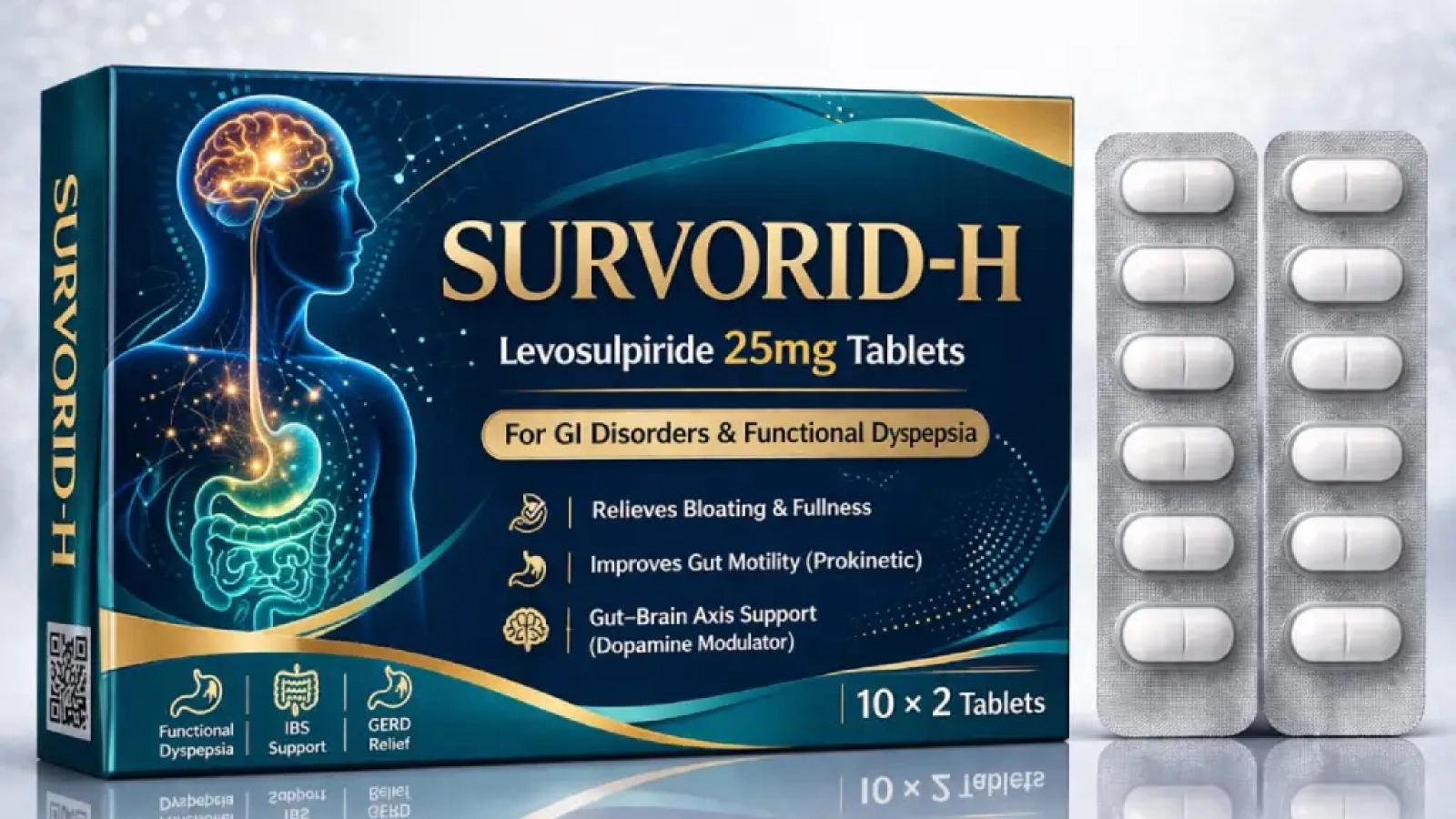
SURVORID-H® Tablets (25 mg)

Generic Name:
Levosulpiride
Therapeutic Group:
Gastrointestinal Therapeutics
Drug Category:
Prokinetic Agent / Selective Dopamine D₂ Receptor Antagonist
Content / Composition:
Each tablet contains:
* Levosulpiride …… 25 mg
Indications:
Indicated for the treatment of:
* Functional dyspepsia
* Irritable Bowel Syndrome (IBS)
* Gastroesophageal Reflux Disease (GERD)
* Delayed gastric emptying (gastroparesis)
* Nausea and vomiting associated with GI disorders
Dosage:
As directed by the physician.
Typical dose:
* 25 mg, 2–3 times daily before meals
* Dose may be adjusted based on clinical response
Contraindications:
* Hypersensitivity to levosulpiride
* Gastrointestinal bleeding, obstruction, or perforation
* Pheochromocytoma
* Epilepsy or seizure disorders
* Prolactin-dependent tumors (e.g., prolactinoma)
Administration:
* Oral administration
* Preferably taken before meals
* Swallow with sufficient water
* Follow physician’s instructions
Interaction:
* CNS depressants → increased sedation
* Antihypertensives → additive hypotensive effect
* Dopaminergic drugs (e.g., levodopa) → antagonistic effect
* Alcohol → enhances CNS side effects
Compatibility:
* Compatible with PPIs, antacids, and most GI therapies
* Avoid unnecessary combination with CNS depressants
Stability / Storage:
* Store below 25°C
* Protect from light and moisture
* Keep out of reach of children
Precautions:
* Use with caution in renal impairment (dose adjustment may be required)
* Monitor for extrapyramidal symptoms
* Risk of hyperprolactinemia with prolonged use
* Use cautiously in elderly patients
* Avoid long-term use without medical supervision
Side Effects:
Common:
* Drowsiness
* Fatigue
* Dizziness
Less common:
* Headache
* Gastrointestinal disturbances
Rare but serious:
* Extrapyramidal symptoms (tremor, rigidity)
* Hyperprolactinemia (galactorrhea, gynecomastia)
* Menstrual disturbances
Professional Note (For Website):
Levosulpiride is a highly selective dopamine D₂ receptor antagonist with dual prokinetic and anti-dyspeptic effects. It enhances gastrointestinal motility and modulates the gut–brain axis, making it an effective therapy for functional gastrointestinal disorders at lower and well-tolerated doses such as 25 mg

WhatsApp-Image-2026-04-11-at-7.18.28-AM (46)

PRAM 10 mg Tablets

PRAM 10 mg Tablets
Generic Name:
Escitalopram 10 mg
Therapeutic Group:
Antidepressant / Anxiolytic Medicine
Drug Category:
Selective Serotonin Reuptake Inhibitor — SSRI
Content / Composition:
Each film-coated tablet contains:
Escitalopram Oxalate equivalent to Escitalopram 10 mg.
Indications:
PRAM is used for the treatment of:
Depression
Generalized Anxiety Disorder
Panic Disorder
Social Anxiety Disorder
Obsessive Compulsive Disorder, when prescribed by a physician. �
nhs.uk +1
Dosage:
Usually 10 mg once daily, or as directed by the physician. Dose adjustment must be done only by a doctor.
Contraindications:
Not recommended in patients with allergy to escitalopram or citalopram. Do not use with MAO inhibitors or pimozide due to serious interaction risk. �
Drugs.com +1
Administration:
Take orally once daily, with or without food. Take at the same time each day. Do not stop suddenly without medical advice.
Interactions:
May interact with MAO inhibitors, pimozide, other antidepressants, lithium, tramadol, triptans, warfarin, NSAIDs, aspirin, some antipsychotics, medicines affecting heart rhythm, and alcohol. �
NCBI +1
Compatibility:
Compatible for oral use as prescribed. Avoid combination with other serotonin-increasing medicines unless supervised by a physician.
Stability / Storage:
Store below 25°C. Protect from moisture, heat, and direct sunlight. Keep out of reach of children.
Precautions:
Use with caution in patients with epilepsy, liver disease, kidney disease, heart rhythm problems, bleeding disorders, bipolar disorder, glaucoma, or history of low sodium. Young patients may need close monitoring at treatment start or dose change. �
MedlinePlus +1
Side Effects:
Common side effects may include nausea, headache, dry mouth, sweating, sleepiness, dizziness, insomnia, fatigue, constipation, reduced appetite, and sexual dysfunction. Serious side effects are uncommon but require urgent medical advice. �
nhs.uk +1
Important Note:
PRAM should be used only under medical supervision. This information is for educational and product-information purposes only.

WhatsApp-Image-2026-04-11-at-7.18.28-AM (45)

LS-CETAM 500 mg Tablets

LS-CETAM 500 mg Tablets
Generic Name:
Levetiracetam 500 mg
Therapeutic Group:
Antiepileptic Medicine (Anticonvulsant)
Drug Category:
Central Nervous System (CNS) Agent — Pyrrolidone Derivative
Content / Composition:
Each film-coated tablet contains:
Levetiracetam ……………… 500 mg
Excipients ………………… q.s.
Indications:
LS-CETAM is indicated for the treatment of:
Partial-onset seizures (with or without secondary generalization)
Myoclonic seizures in patients with Juvenile Myoclonic Epilepsy
Primary generalized tonic-clonic seizures
Adjunctive therapy in epilepsy management
Dosage:
Adults: Usually 500 mg twice daily, may be increased based on clinical response
Maximum dose: Up to 3000 mg/day
Dose adjustment required in renal impairment
As directed by the physician
Contraindications:
Hypersensitivity to levetiracetam or other pyrrolidone derivatives
Severe allergic reactions to any component of the formulation
Administration:
Administer orally with or without food
Swallow tablets whole with water
Do not abruptly discontinue therapy (risk of seizure increase)
Drug Interactions:
Generally low interaction profile
Caution with CNS depressants (may increase sedation)
Minimal hepatic metabolism reduces interaction risk
No significant interaction with oral contraceptives
Compatibility:
Suitable for combination therapy with other antiepileptic drugs
Compatible with long-term epilepsy management protocols
Stability / Storage:
Store below 25°C
Protect from moisture and direct sunlight
Keep out of reach of children
Precautions:
Monitor for behavioral changes (agitation, depression, mood swings)
Use with caution in renal impairment (dose adjustment required)
Gradual withdrawal recommended
Use during pregnancy and lactation only if clearly needed
Monitor patients for suicidal ideation
Side Effects:
Common:
Drowsiness
Dizziness
Fatigue
Headache
Less Common:
Irritability
Anxiety
Loss of appetite
Sleep disturbances
Rare but Serious:
Severe behavioral changes
Depression or suicidal thoughts
Allergic reactions
Important Note:
LS-CETAM should be used only under medical supervision. This information is intended for healthcare professionals and educational purposes only.

WhatsApp-Image-2026-04-11-at-7.18.28-AM (44)

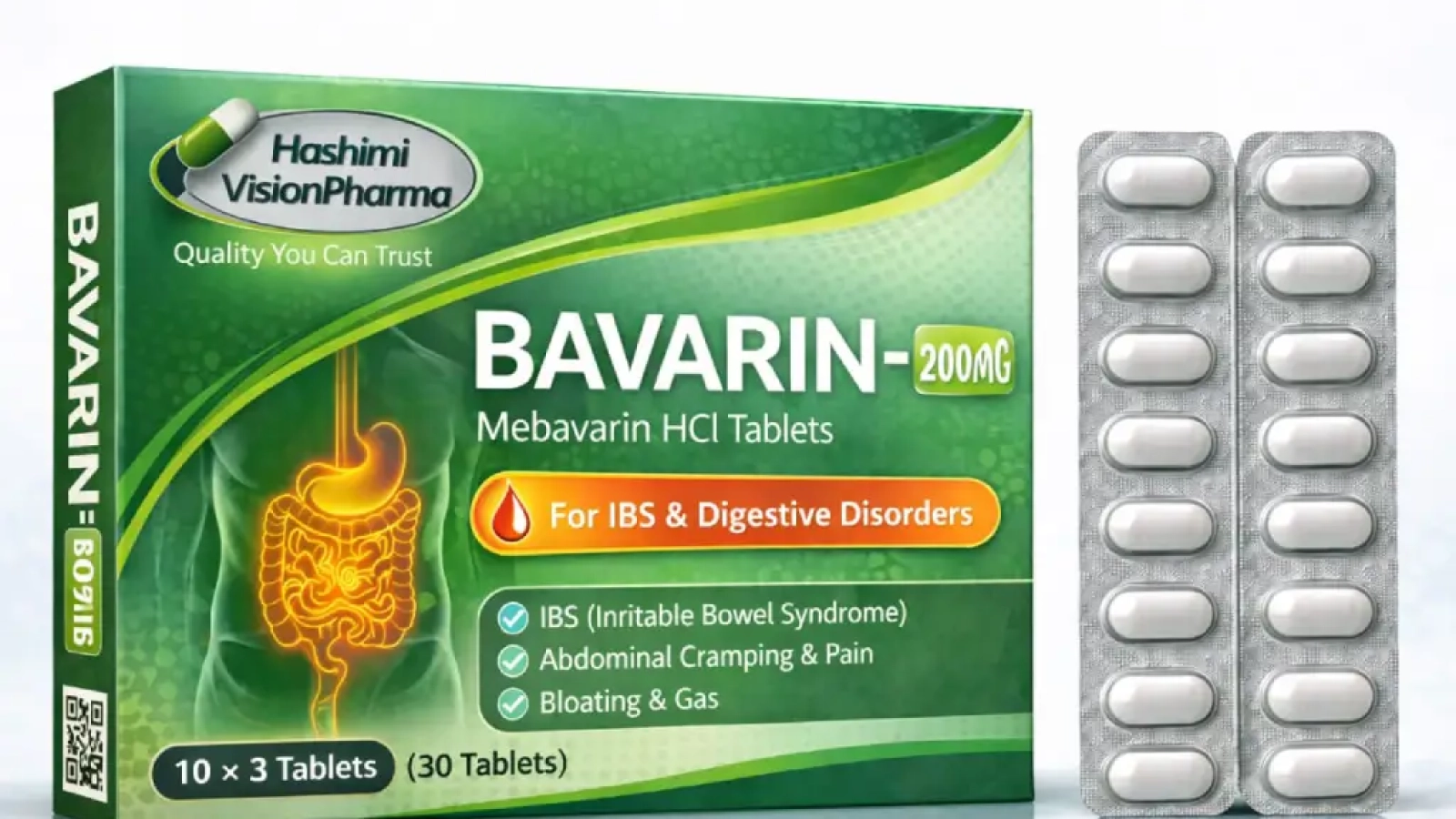
BAVARIN-200 mg Tablets

BAVARIN-200 mg Tablets
Generic Name:
Mebeverine Hydrochloride 200 mg
Therapeutic Group:
Antispasmodic (Gastrointestinal)
Drug Category:
Direct Smooth Muscle Relaxant
Content / Composition:
Each tablet contains:
Mebeverine Hydrochloride ……………… 200 mg
Excipients ……………………………………… q.s.
Indications:
BAVARIN is indicated for the symptomatic treatment of:
Irritable Bowel Syndrome (IBS)
Abdominal pain and cramping
Functional gastrointestinal disorders
Bloating and flatulence
Intestinal spasms
Dosage:
Adults: 135–200 mg, 2 to 3 times daily (depending on formulation)
Preferably taken before meals
As directed by the physician
Contraindications:
Hypersensitivity to mebeverine or any component of the formulation
Not recommended in children unless prescribed
Administration:
Administer orally with a glass of water
Swallow whole; do not crush or chew
Take 20 minutes before meals for optimal effect
Drug Interactions:
No clinically significant interactions reported
Can be safely co-administered with most medications
Low systemic absorption reduces interaction risk
Compatibility:
Suitable for combination with other GI medications
Compatible with long-term management of IBS
Stability / Storage:
Store below 25°C
Protect from light and moisture
Keep out of reach of children
Precautions:
Use with caution in severe constipation
Rule out serious underlying conditions before treatment
Not a substitute for dietary and lifestyle management
Use in pregnancy and lactation only if necessary
Side Effects:
Common (rare overall):
Mild gastrointestinal discomfort
Nausea
Uncommon:
Headache
Dizziness
Rare:
Allergic reactions (rash, urticaria, angioedema)
Important Note:
BAVARIN is intended for symptomatic relief of gastrointestinal spasms and IBS. It should be used under medical supervision. This information is for healthcare professionals and educational purposes only.

WhatsApp-Image-2026-04-11-at-7.18.28-AM (43)

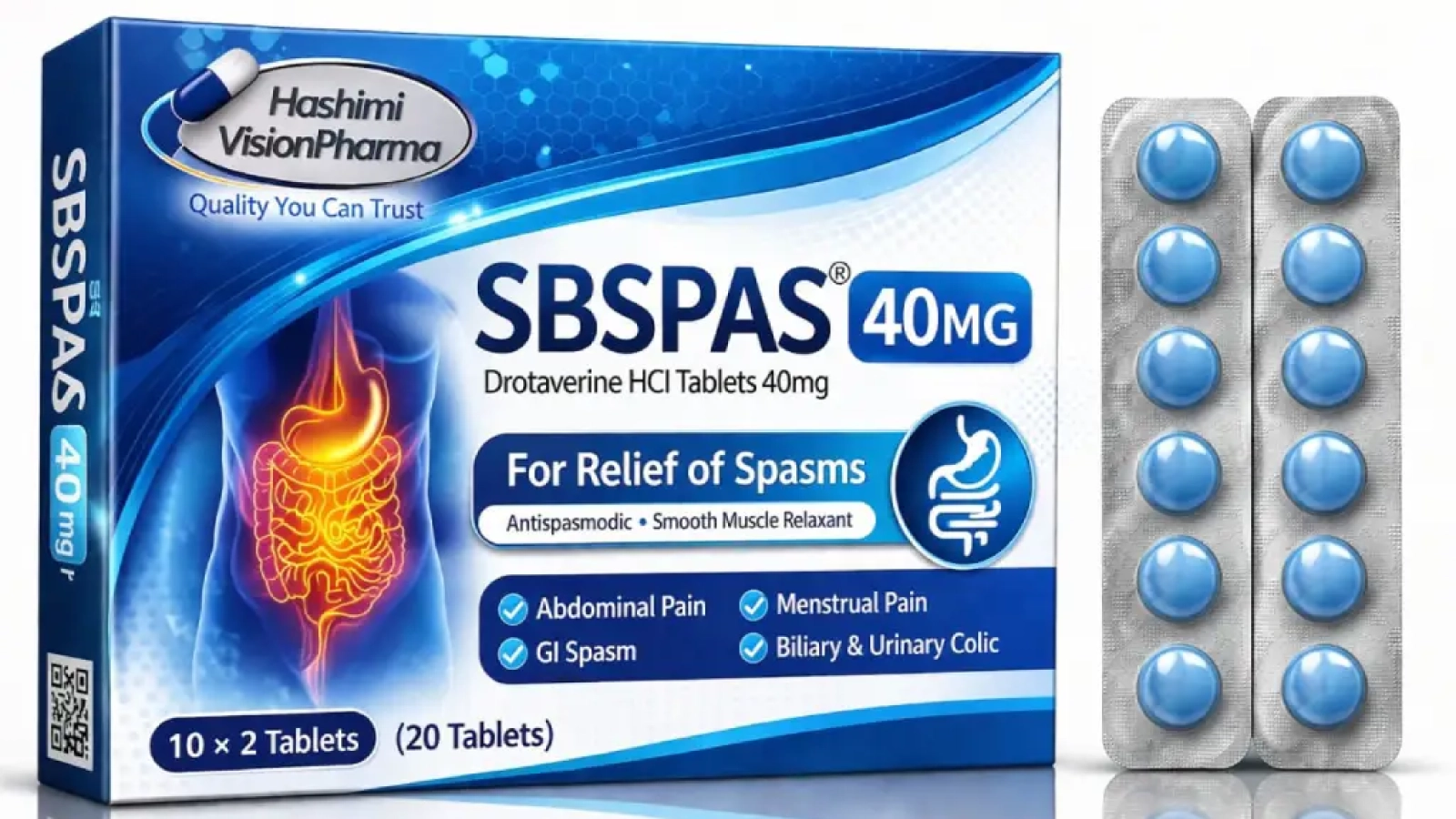
SBSPAS 40 mg Tablets

SBSPAS 40 mg Tablets
Generic Name:
Drotaverine Hydrochloride 40 mg
Therapeutic Group:
Antispasmodic
Drug Category:
Smooth Muscle Relaxant (Phosphodiesterase-4 Inhibitor)
Content / Composition:
Each tablet contains:
Drotaverine Hydrochloride ……………… 40 mg
Excipients ……………………………………… q.s.
Indications:
SBSPAS is indicated for relief of smooth muscle spasms in:
Gastrointestinal tract (abdominal pain, IBS, intestinal colic)
Biliary tract (biliary colic)
Urinary tract (renal/ureteric colic)
Gynecological conditions (dysmenorrhea / menstrual pain)
Dosage:
Adults: 40–80 mg, 2 to 3 times daily
Maximum dose: As directed by the physician
Dose adjustment based on clinical response
Contraindications:
Hypersensitivity to drotaverine
Severe hepatic, renal, or cardiac failure
Hypotension (use with caution)
Administration:
Administer orally with water
Can be taken with or without food
Swallow whole; do not crush unless advised
Drug Interactions:
May enhance hypotensive effect of antihypertensive drugs
Caution with other antispasmodics or vasodilators
No major clinically significant interactions reported
Compatibility:
Suitable for combination therapy in GI and urogenital conditions
Compatible with analgesics and supportive treatments
Stability / Storage:
Store below 25°C
Protect from light and moisture
Keep out of reach of children
Precautions:
Use with caution in hypotension
Monitor in patients with severe organ impairment
Safety in pregnancy should be assessed by physician
Not recommended for pediatric use unless prescribed
Side Effects:
Common:
Headache
Dizziness
Nausea
Uncommon:
Palpitations
Hypotension
Rare:
Allergic reactions (rash, itching)
Sweating
Important Note:
SBSPAS is intended for symptomatic relief of smooth muscle spasms. It should be used under medical supervision. This information is for healthcare professionals and educational purposes only.

WhatsApp-Image-2026-04-11-at-7.18.28-AM (42)

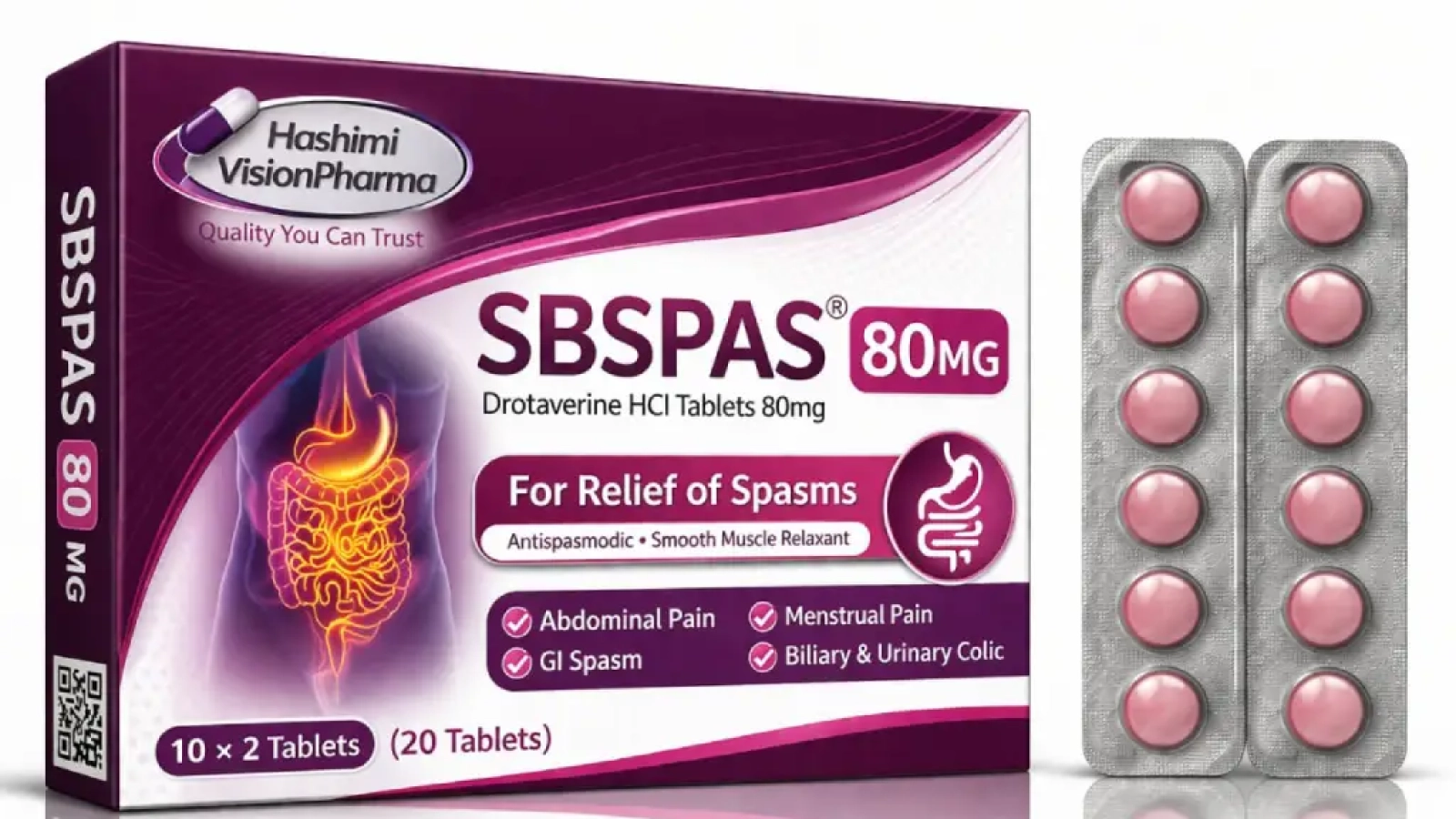
SBSPAS 80 mg Tablets

SBSPAS 80 mg Tablets
Generic Name:
Drotaverine Hydrochloride 80 mg
Therapeutic Group:
Antispasmodic
Drug Category:
Smooth Muscle Relaxant (Phosphodiesterase-4 Inhibitor)
Content / Composition:
Each tablet contains:
Drotaverine Hydrochloride ……………… 80 mg
Excipients ……………………………………… q.s.
Indications:
SBSPAS is indicated for relief of smooth muscle spasms in:
Gastrointestinal disorders (abdominal pain, intestinal spasm, IBS)
Biliary colic
Renal and urinary tract colic
Gynecological conditions (dysmenorrhea / menstrual pain)
Dosage:
Adults: 80 mg, 2 to 3 times daily
Dose may be adjusted based on severity and clinical response
As directed by the physician
Contraindications:
Hypersensitivity to drotaverine
Severe hepatic, renal, or cardiac insufficiency
Severe hypotension
Administration:
Administer orally with water
Can be taken with or without food
Swallow whole; do not crush unless advised
Drug Interactions:
May enhance effect of antihypertensive drugs
Caution with other vasodilators
Generally low interaction profile
Compatibility:
Suitable for combination therapy with analgesics and GI medications
Compatible with long-term spasm management
Stability / Storage:
Store below 25°C
Protect from moisture and light
Keep out of reach of children
Precautions:
Use cautiously in patients with low blood pressure
Monitor patients with cardiac conditions
Safety in pregnancy and lactation should be assessed by physician
Not recommended for pediatric use unless prescribed
Side Effects:
Common:
Headache
Dizziness
Nausea
Uncommon:
Palpitations
Hypotension
Rare:
Allergic reactions (rash, itching)
Sweating
Important Note:
SBSPAS is intended for symptomatic relief of smooth muscle spasms. It should be used under medical supervision. This information is for healthcare professionals and educational purposes only.

WhatsApp-Image-2026-04-11-at-7.18.28-AM (41)

ROZINUS GOLD Capsules

ROZINUS GOLD Capsules
Generic Name:
Aspirin 75 mg + Clopidogrel 75 mg + Rosuvastatin 20 mg
Therapeutic Group:
Cardiovascular Protection
Drug Category:
Antiplatelet + HMG-CoA Reductase Inhibitor (Statin)
Content / Composition:
Each capsule contains:
Aspirin ……………………………………… 75 mg
Clopidogrel ……………………………… 75 mg
Rosuvastatin …………………………… 20 mg
Excipients ………………………………… q.s.
Indications:
ROZINUS GOLD is indicated for:
Prevention of cardiovascular events (heart attack, stroke)
Secondary prevention in patients with coronary artery disease
Post-angioplasty / stent placement management
Dyslipidemia with high cardiovascular risk
Atherosclerotic cardiovascular disease (ASCVD)
Dosage:
One capsule once daily or as directed by the physician
Preferably taken at the same time each day
Long-term therapy based on clinical evaluation
Contraindications:
Hypersensitivity to aspirin, clopidogrel, or statins
Active bleeding (e.g., peptic ulcer, intracranial hemorrhage)
Severe hepatic impairment
Pregnancy and lactation
History of statin-induced myopathy
Administration:
Administer orally with water
Can be taken with or without food
Do not crush or chew capsule
Drug Interactions:
Increased bleeding risk with anticoagulants (warfarin, heparin)
Interaction with NSAIDs and corticosteroids
Rosuvastatin interaction with certain antivirals and cyclosporine
Avoid excessive alcohol consumption
Compatibility:
Suitable for combination cardiovascular therapy
Compatible with antihypertensives and antidiabetic agents
Stability / Storage:
Store below 25°C
Protect from light, moisture, and heat
Keep out of reach of children
Precautions:
Monitor for signs of bleeding
Liver function tests recommended during statin therapy
Use cautiously in elderly patients
Evaluate muscle symptoms (risk of myopathy)
Avoid abrupt discontinuation in cardiac patients
Side Effects:
Common:
Gastric irritation
Headache
Dizziness
Nausea
Uncommon:
Bleeding (gastrointestinal, bruising)
Elevated liver enzymes
Muscle pain
Serious (Rare):
Rhabdomyolysis
Severe bleeding
Allergic reactions
Important Note:
ROZINUS GOLD is a combination therapy for cardiovascular risk reduction and should be used under strict medical supervision. This information is intended for healthcare professionals and educational purposes only.