
RAFAMIN-H® Tablets
Generic Name:
Rifaximin
Therapeutic Group:
Gastrointestinal Anti-infective
Drug Category:
Non-systemic Rifamycin Antibiotic
Content / Composition:
Each film-coated tablet contains:
* Rifaximin …… 550 mg
Indications:
Indicated for the treatment of:
* Irritable Bowel Syndrome with Diarrhea (IBS-D)
* Small Intestinal Bacterial Overgrowth (SIBO)
* Traveler’s diarrhea (caused by non-invasive E. coli)
* Hepatic encephalopathy (reduction of recurrence)
Dosage:
As directed by the physician.
Typical dosing:
* IBS-D: 550 mg three times daily for 14 days
* Hepatic encephalopathy: 550 mg twice daily
* Traveler’s diarrhea: 200 mg three times daily for 3 days
Contraindications:
* Hypersensitivity to rifaximin, rifamycin derivatives, or any component
* Severe intestinal obstruction
* Diarrhea with fever and blood (invasive infections)
Administration:
For oral use.
* Can be taken with or without food
* Swallow tablet whole with water
* Complete full course of therapy
Interaction:
Minimal systemic absorption → low interaction risk
Use caution with:
* P-glycoprotein inhibitors
* Warfarin (monitor INR)
* Other antibiotics (risk of resistance)
Compatibility:
Compatible with most gastrointestinal therapies
Can be used alongside probiotics and IBS management regimens
Stability / Storage:
Store below 25°C
Protect from moisture and light
Keep out of reach of children
Precautions:
* Not effective in invasive bacterial diarrhea
* Use cautiously in severe hepatic impairment
* Risk of Clostridioides difficile-associated diarrhea
* Monitor for recurrence in chronic conditions (IBS, HE)
* Avoid unnecessary prolonged use
Side Effects:
Common:
* Nausea
* Flatulence
* Abdominal pain
* Headache
Less common:
* Constipation
* Dizziness
Rare but serious:
* Hypersensitivity reactions
* Severe diarrhea (C. difficile infection)
Website Note (Professional):
Rifaximin is a gut-selective antibiotic with minimal systemic absorption, offering targeted action in intestinal disorders such as IBS-D and SIBO while maintaining a favorable safety profile.
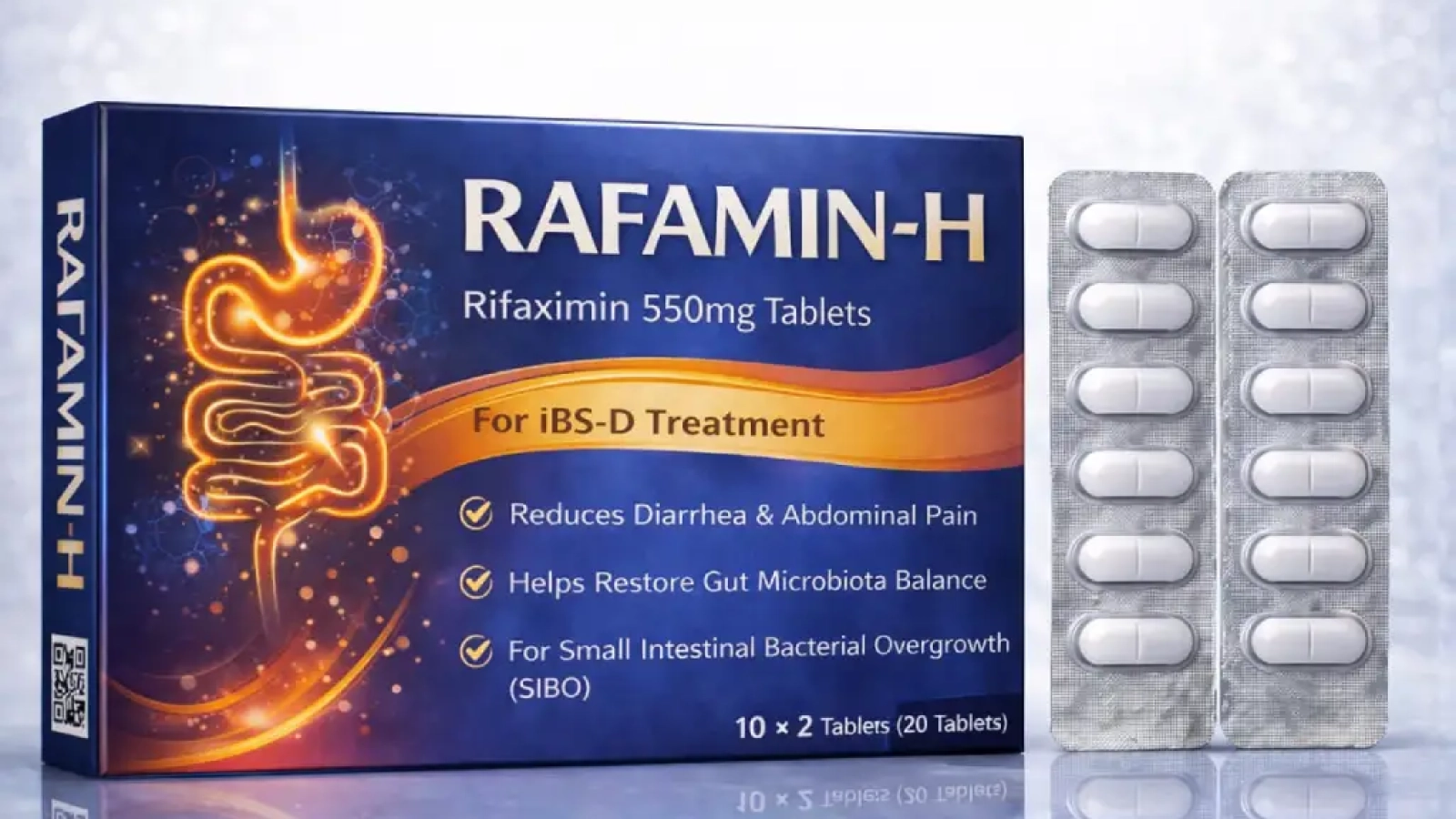
RAFAMIN-H® Tablets
with
no comment