

FEVER-H® Tablets (Ibuprofen 400 mg)
FEVER-H® Tablets (Ibuprofen 400 mg)
Generic Name:
Ibuprofen
Therapeutic Group:
Analgesic, Antipyretic & Anti-inflammatory
Drug Category:
Non-Steroidal Anti-Inflammatory Drug (NSAID)
Content / Composition:
Each tablet contains:
* Ibuprofen BP …… 400 mg
* Excipients …… q.s.
Indications:
* Fever (Pyrexia)
* Mild to moderate pain
* Headache
* Toothache
* Musculoskeletal pain
* Back pain
* Dysmenorrhea (menstrual pain)
* Inflammatory conditions (e.g. arthritis)
* Cold & flu symptoms
Dosage:
As directed by the physician
Adults:
* 200–400 mg every 6–8 hours
* Maximum: 1200–2400 mg/day (depending on clinical condition)
Children (>6 months):
* 5–10 mg/kg every 6–8 hours
* Maximum: 40 mg/kg/day
⚠️ Use lowest effective dose for shortest duration
Contraindications:
* Hypersensitivity to ibuprofen or NSAIDs
* History of NSAID-induced asthma
* Active peptic ulcer or GI bleeding
* Severe heart failure
* Severe renal or hepatic impairment
* Third trimester of pregnancy
Administration:
* Oral use
* Take with food or after meals to reduce gastric irritation
* Swallow with sufficient water
Interaction:
* Anticoagulants (Warfarin) → increased bleeding risk
* Aspirin → reduced cardioprotective effect
* ACE inhibitors & diuretics → reduced renal function
* Corticosteroids → increased GI risk
* Lithium → increased lithium levels
Compatibility:
* Compatible with paracetamol in combination therapy (under supervision)
* Avoid concurrent use with other NSAIDs
Stability / Storage:
* Store below 25°C
* Protect from light and moisture
* Keep out of reach of children
Precautions:
* Use cautiously in elderly patients
* Risk of GI ulceration and bleeding
* Monitor renal function in long-term use
* Caution in cardiovascular disease
* Avoid prolonged self-medication
Side Effects:
Common:
* Gastric irritation
* Nausea
* Dyspepsia
Less Common:
* Headache
* Dizziness
* Fluid retention
Serious (rare):
* GI bleeding or ulcer
* Renal impairment
* Hypersensitivity reactions
* Cardiovascular events (with long-term/high dose use)
Professional Summary:
FEVER-H® (Ibuprofen 400 mg) is a globally recognized NSAID providing:
✔️ Rapid fever reduction
✔️ Effective pain relief
✔️ Anti-inflammatory action
Widely used as a first-line therapy for fever, pain, and inflammatory conditions with strong clinical reliability.
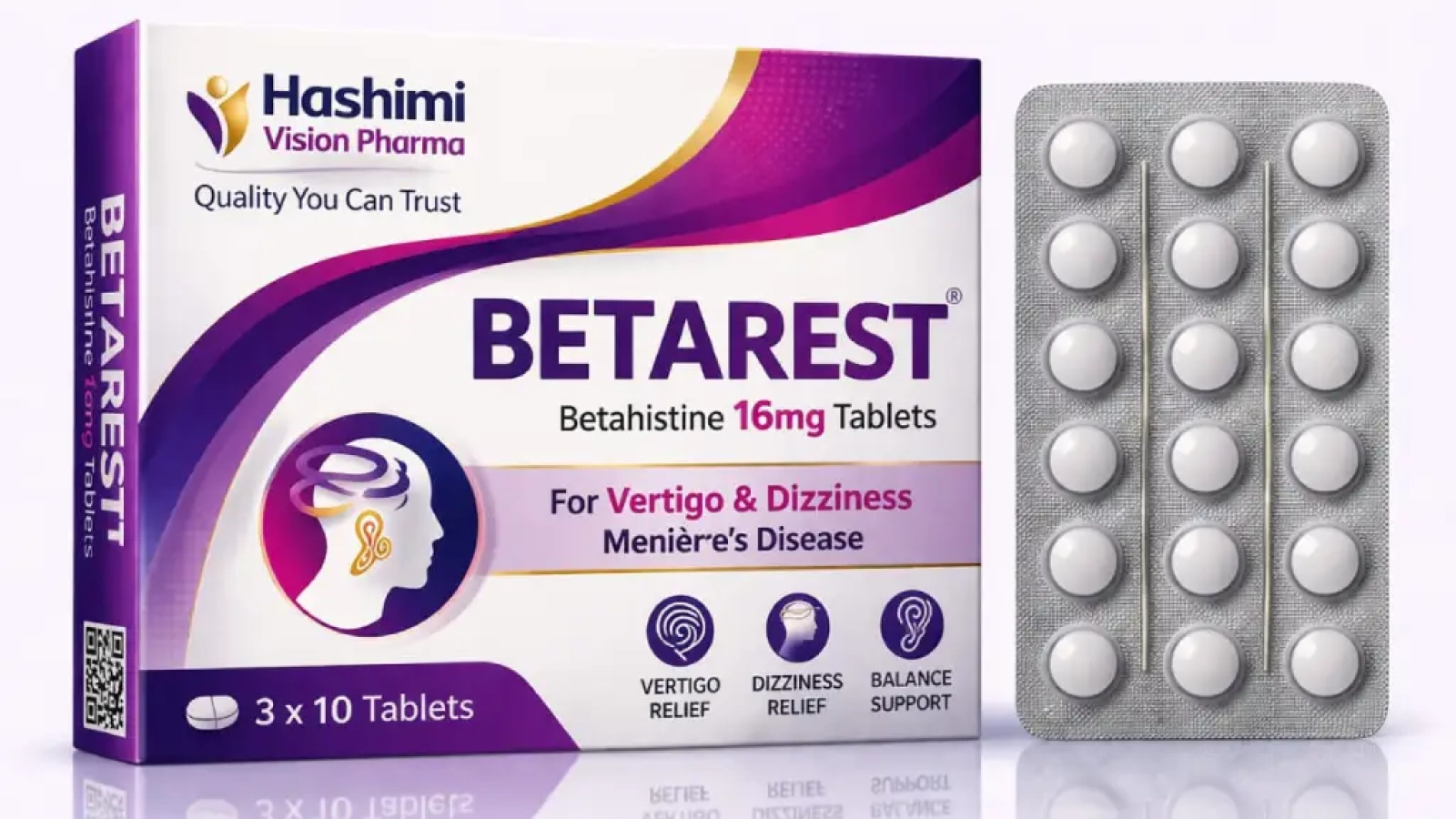
BETAREST® Tablets
BETAREST® Tablets
Generic Name:
Betahistine Dihydrochloride 16 mg
Therapeutic Group:
Anti-Vertigo Agents
Drug Category:
Histamine Analog (H1 Agonist / H3 Antagonist)
Content / Composition:
Each tablet contains:
Betahistine Dihydrochloride ………… 16 mg
Excipients ……………………………… q.s.
Indications:
BETAREST® is indicated for:
Vertigo of vestibular origin
Ménière’s disease
Dizziness and imbalance
Tinnitus (ringing in ears)
Hearing disturbances associated with vestibular disorders
Dosage:
Adults: 8–16 mg, 2–3 times daily
Usual maintenance dose: 24–48 mg per day in divided doses
Taken preferably with meals
Dose may be adjusted based on clinical response
As directed by the physician
Contraindications:
Hypersensitivity to betahistine or any component
Pheochromocytoma
Use with caution in patients with peptic ulcer disease
Pregnancy and lactation (unless clearly indicated)
Administration:
Oral use with water
Take with food to minimize gastric irritation
Do not exceed recommended dosage
Drug Interactions:
Antihistamines → May reduce effectiveness of betahistine
MAO inhibitors → May increase betahistine levels
Alcohol → May worsen dizziness
Compatibility:
Can be used alongside vestibular rehabilitation therapy
Suitable for long-term management of Ménière’s disease
Compatible with symptomatic treatments for vertigo
Stability / Storage:
Store below 25°C
Protect from moisture and light
Keep out of reach of children
Precautions:
Use cautiously in bronchial asthma
Monitor patients with gastric ulcer history
Gradual improvement expected (may take few weeks)
Not recommended for children unless prescribed
Side Effects:
Common:
Headache
Nausea
Mild gastrointestinal discomfort
Uncommon:
Indigestion
Abdominal pain
Rare:
Hypersensitivity reactions (rash, itching)
Clinical Note:
BETAREST® (Betahistine) improves microcirculation in the inner ear, reducing endolymphatic pressure and effectively relieving vertigo, dizziness, and associated symptoms. It is a first-line therapy in the management of Ménière’s disease.